Ojos Azules Cat
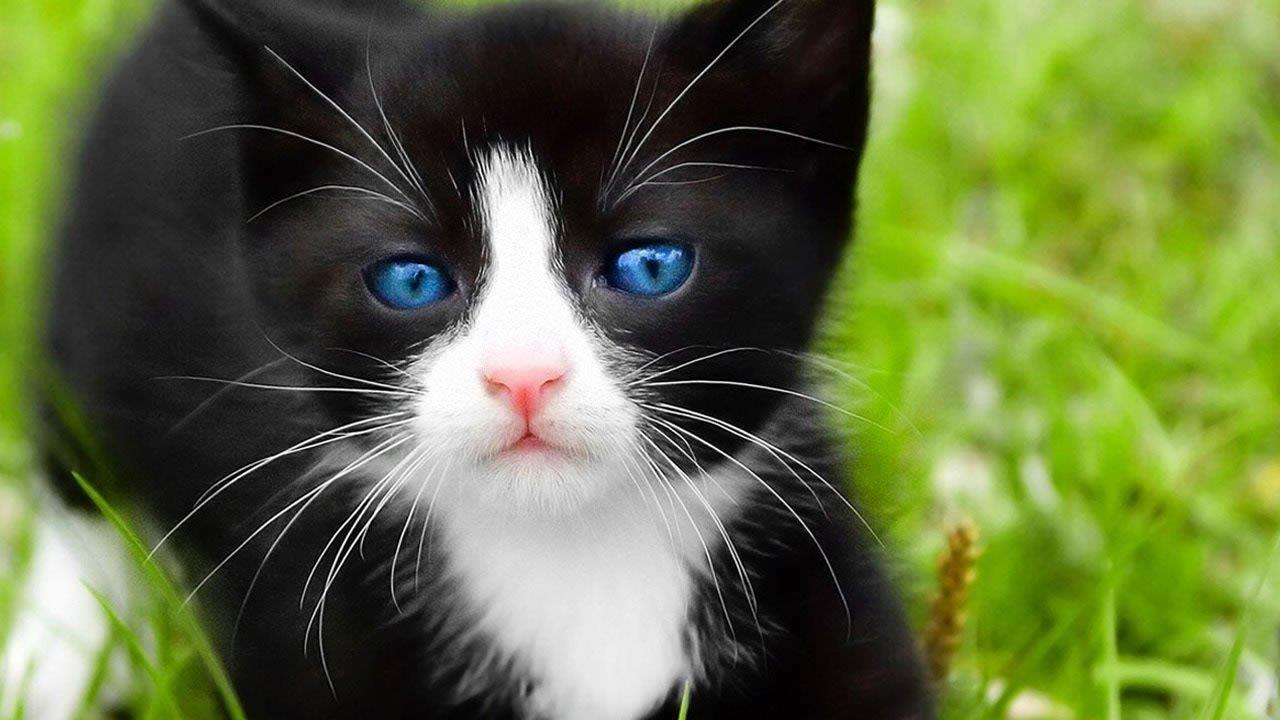
The Ojos Azules is a cat known for one thing: deep blue eyes that turn up in coats where blue eyes normally never appear. The name is Spanish for "blue eyes", and in the classic line those eyes could show in a dark or tortoiseshell cat, not just the pale colourpoint and white cats where blue eyes are usual. It is a striking trait, and it made the cat briefly famous. It was also always extremely rare, and the gene behind it carried a serious catch. If you have landed here to check a breeder's claim, the short version is that a true Ojos Azules is very hard to verify and mostly a thing of the past.
History and Origin
The line traces back to New Mexico, in the United States, in the 1980s. It started with a blue-eyed tortoiseshell cat usually named Cornflower, reported as found in 1984. The blue-eye trait seemed to pass on in a way consistent with a dominant mutation, so breeders tried to build a line around it.1 It never took off. One figure repeated across breed summaries is that only about ten cats were known by 1992.1
Appearance and Physical Characteristics
The eyes do all the work here. In most descriptions the cat sits close to an ordinary domestic type in body shape, with the blue (or odd, meaning one blue eye and one of another colour) eyes as the identifying feature rather than folded ears or a bobtail.1 A shorthaired and a semi-longhaired variety were both described, and the line was reported across many coat colours.1 Some accounts mention a white tail tip as a common marker. None of this is a reliable fingerprint. Blue eyes can arise through other genetic routes, especially in colourpoint cats and some white cats, so a photo of blue eyes proves nothing about breed on its own.1
Temperament and Personality
There is no dependable "breed temperament" to quote, because the historic population was tiny and never large enough to establish one. If a cat is advertised as Ojos Azules, expect its personality to come from individual character, early handling and environment rather than from a stable breed profile. What holds for cats generally holds here: most do well with routine, gentle handling, and enough enrichment to express normal hunting and climbing behaviours.
Is an Ojos Azules Right for You?
For almost everyone, this is not a cat you go out and buy. Even at the height of interest it was never a common, widely established pedigree cat, and some registries recorded it only in limited categories, for example as "registration only" in TICA, meaning the line existed on paper without being broadly shown or advanced.2 If someone offers you an "Ojos Azules kitten" today, treat it as a claim that needs proof of documented lineage and registry paperwork, not something you can confirm from blue eyes alone. In Australia, cat ownership rules such as desexing, microchipping and containment vary by state and council, so check your local requirements for any cat you take on. A striking, healthy blue-eyed cat from a shelter or a reputable breeder is a far safer goal than chasing a rare label.
Health and Lifespan
This is the part that matters most, and it is why the breeding largely stopped. Reports of the classic Ojos Azules mutation describe it as lethal when homozygous: kittens that inherit the mutation from both parents show severe congenital defects and stillbirths, while carriers with only one copy could appear normal.1 That single fact is the reason any "true Ojos Azules" claim should raise immediate questions about genetic management, outcrossing and transparency. If the answers are vague, walk away.
Deafness needs a correction rather than a scare. Blue eyes by themselves do not mean a cat will be deaf. The well-known deafness risk is strongest in white cats, particularly white cats with blue eyes, because coat pigmentation is linked to inner ear development, not because blue eyes are a hearing problem in every cat.3, 4 If you have, or are considering, a white cat with blue eyes and hearing status matters for safety, ask your vet about a BAER hearing test.3
Grooming and Care
Grooming tracks the coat, not the eyes. A short, smooth coat is usually light work, and a weekly brush is often enough to lift loose hair and keep it tidy. A longer coat needs more brushing to prevent tangles, especially around friction points such as the collar area and behind the legs. Beyond that, think habitat rather than exercise routine: cats do best with a small landscape of their own, meaning vertical perches, scratchable surfaces, hiding spots, and short bursts of play that mimic stalking and pouncing.
Diet and Nutrition
Feed to body condition rather than to a label. Choose a complete and balanced cat food suited to the cat's life stage, watch for early weight drift, and keep fresh water easy to reach. If a cat has any diagnosed condition, let the vet guide any diet changes.
A Few Things Worth Knowing
- Ask for paperwork, meaning pedigree and registry details, not anecdotes.
- Be sceptical of certainty based on photos. Blue eyes occur in other cats for other reasons.1
- Ask direct health questions about congenital defects in the line and how breeding pairs are selected to reduce risk.1
- "Ojos Azules" simply means "blue eyes" in Spanish and is used as a descriptive label in several contexts. There is no biological link to the Morab horse, despite the shared use of the phrase.
The Bottom Line
The Ojos Azules is a real footnote in cat history: a striking blue-eye mutation, briefly organised into a named line, then largely abandoned because the genetics carried unacceptable risk.1, 2 The useful takeaway is not to hunt the label. It is to notice how quickly "rare breed" claims can outrun reality, and to choose cats and breeders where health, documentation and everyday care are treated seriously.
References
- Ojos Azules (overview, history, and genetics)
- The International Cat Association (TICA), overview including "registration only" category listing Ojos Azules
- Cornell University College of Veterinary Medicine: White cats, blue eyes, and deafness (Q&A)
- Merck Veterinary Manual (Professional): Deafness in animals (pigment-associated deafness; BAER testing)
- GCCF (UK): Unrecognised breeds (how recognition affects showing/registration)
- ABC Science (Dr Karl): White cats, blue eyes, and deafness (background explainer)
- Congenital sensorineural deafness in cats (overview and association with white coat/blue eyes)
- Merck Veterinary Manual: Commonly reported congenital and inherited defects in cats (includes deafness association with white fur/blue eyes)

Dog lover and writer at My Pets Australia, sharing practical breed guides and care advice for Australian pet owners.