Norwegian Forest Cat
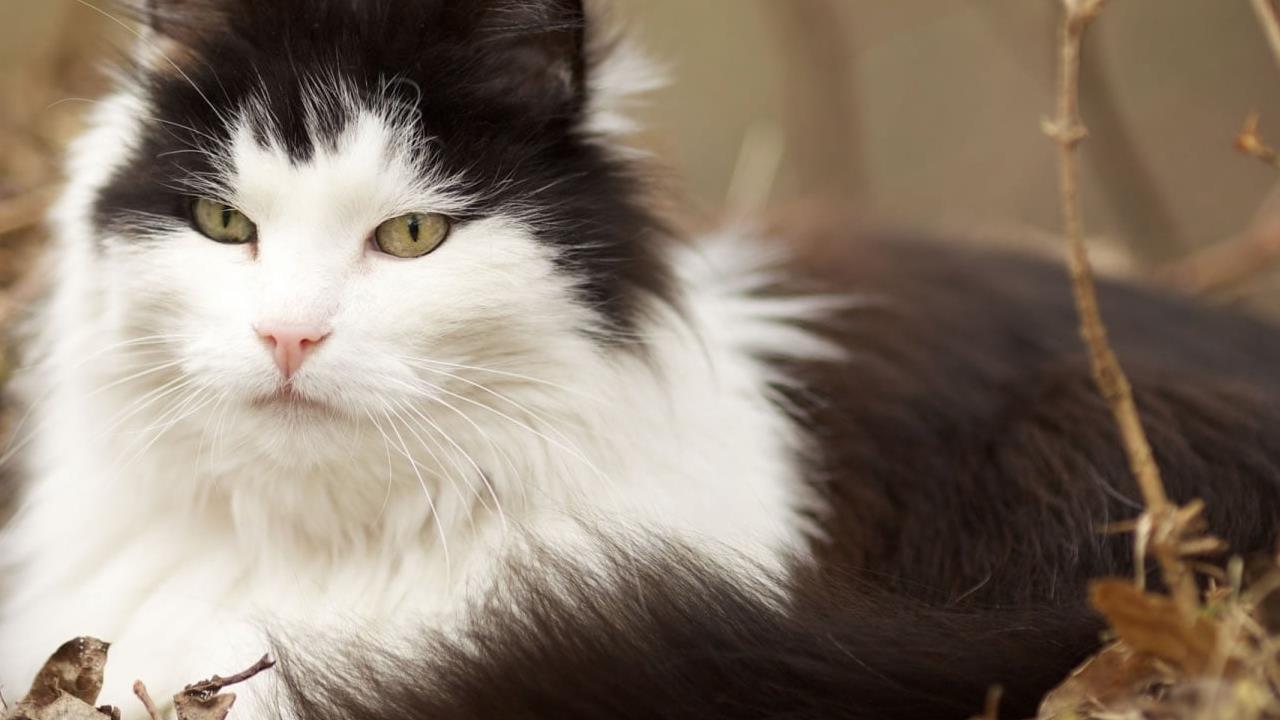
The Norwegian Forest Cat is a big, athletic, semi-longhaired breed from Scandinavia, built for cold weather and serious climbing. People tend to look one up when they are weighing a breeder, getting to know a very fluffy new arrival, or trying to tell the large longhaired breeds apart, since several of them look similar at a glance. The appeal is easy to see: a substantial, capable cat with a dramatic double coat and a calm, sociable nature that usually likes company without demanding a lap. It is also a practical decision, because the day-to-day care, especially the grooming, is different from a short-haired moggie. This guide covers what the breed is like to live with, how to recognise the build and coat, and which health issues are worth raising with your vet.
Size: Medium to large
Typical weight: Females often around 4 to 5.5 kg, males often around 5.5 to 7.5 kg (individuals vary)1
Coat: Semi-long, double coat with water-resistant guard hairs over a dense undercoat2, 3
Colours: Wide range of colours and patterns depending on registry standards (commonly tabby, tortoiseshell, solid and more)2, 3
Temperament (typical): Interactive, intelligent, generally even-tempered, often happy being nearby rather than constantly on laps2
Life expectancy: Often mid-teens with good care (varies with genetics and health)1
Grooming: Regular combing and brushing, especially through seasonal coat change, bathing only if needed2
Health issues to know: Hypertrophic cardiomyopathy (HCM), hip dysplasia (reported but uncommon), and a rare inherited condition called glycogen storage disease type IV (GSD IV)4, 5, 6
Origin: Norway
Other names: Skogkatt, Norsk skogkatt
History and Origin
The Norwegian Forest Cat developed in Scandinavia as a natural, hardy type suited to cold, damp conditions. The result is thick insulation underneath, water-resistant guard hairs on top, and a body built for climbing and moving through rough terrain.2, 7
You will often hear Viking-era stories attached to the breed. What is more solid is the modern preservation history. By the 20th century the type was under pressure from cross-breeding and declining numbers, and organised breeding programs in Norway helped stabilise and standardise it for cat registries.2
Appearance and Physical Characteristics
A Norwegian Forest Cat is not just a fluffy cat, and the silhouette does a lot of the work. Look for a strong, substantial body, a long, bushy tail, and hind legs that are typically a little longer than the front, which gives a slightly uphill stance.3
Coat and seasonal change
The coat is a true double coat: a dense undercoat for warmth, topped by longer, water-resistant guard hairs. In cooler months it can look dramatically fuller, then sheds down in warmer weather.2, 3
Head, ears and paws
Breed standards describe a triangular head shape, almond-shaped eyes, and well-furnished ears, sometimes with lynx tips. The paws are often heavily tufted, practical insulation for cold ground and snow in their ancestral environment.3, 7
Temperament and Personality
Most Norwegian Forest Cats sit in a calm, capable middle ground: social without being clingy, playful without feeling frantic. Many enjoy following household activity and choosing a nearby perch rather than demanding constant handling.2
They are widely described as intelligent and interactive, and the climbing ability is real. If your home does not offer vertical space, they may improvise with bookshelves and benchtops.2, 7
Is a Norwegian Forest Cat Right for You?
In many homes this breed fits best as a steady presence: affectionate on its own terms, keen to be involved, and often happiest when it can move between company and solitude. They can do well with children and other pets when introductions are patient and the cat has retreat spaces, especially high perches where it will not be crowded.
The main thing to be honest about is the coat and the climbing. This is a big cat that sheds heavily through the seasons and needs consistent grooming, and it will treat benchtops and shelves as part of the landscape until you have built better alternatives. If you want a low-maintenance short-haired cat, this is not it, but if you are happy to comb regularly and provide vertical space, it settles in well.
Training and Exercise
Norwegian Forest Cats often respond well to gentle, consistent training because they like interaction and novelty. Keep it light. Short sessions, a predictable routine, and rewards that do not turn into a calorie blow-out tend to work best.
Enrichment that suits the breed
- Vertical space: tall cat trees, shelving, window perches, giving them a safe up-high option.8
- Hunting-style play: wand toys, chase games, and letting them catch the toy occasionally to finish the sequence.9
- Food puzzles: a slow, searching meal better matches natural behaviour than constant bowl access.9
- Safe containment: if your cat goes outdoors, choose options that reduce roaming risk, such as cat runs, cat-proof fencing, or supervised time.8
Health and Lifespan
No breed is guaranteed trouble-free. The most useful approach is to know what has been reported in the breed, then choose breeders or rescues who are open about health history and screening. With good care, many Norwegian Forest Cats live into their mid-teens.1
Hypertrophic cardiomyopathy (HCM)
HCM is a common form of heart disease in cats overall, and it is also reported in Norwegian Forest Cats. Because some cats show no obvious signs early on, your vet may recommend listening for murmurs at routine exams and, in some cases, an echocardiogram (heart ultrasound).4
Glycogen storage disease type IV (GSD IV)
GSD IV is a rare, inherited disease reported in Norwegian Forest Cats. It is autosomal recessive, so carriers look healthy, and affected kittens may die very young or develop progressive neuromuscular disease later in kittenhood. Genetic testing exists and is particularly relevant for breeding decisions.5, 6
Hip dysplasia
Hip dysplasia has been reported in the breed, but it is generally described as uncommon. Keeping cats lean and comfortably active is one practical way to reduce strain on joints over time, whatever their genetics.4
Weight and mobility
A big-framed cat can still carry too much weight, and indoor lifestyles can make creeping weight gain easy to miss under a thick coat. RSPCA guidance emphasises daily exercise and enrichment for contained cats, and notes that overweight cats are at higher risk of a range of health problems.8
Grooming and Care
The coat looks high-maintenance, but it is not the same as some fine-coated longhair breeds. The practical approach is consistent combing, especially through the undercoat, with extra help during the seasonal shed, when loose undercoat can tangle and felt if it is left to compact.2
What a sensible grooming routine looks like
- Comb or brush regularly, focusing on the ruff, belly, britches and behind the forelegs where knots start.
- Increase grooming during coat change, often most noticeable in spring.
- Bath only when needed, for example if something sticky or oily gets into the coat. Over-bathing can dry the skin and coat.
- Nails, teeth, ears: keep to the same basic schedule you would use for any cat. Trim nails as needed, and ask your vet what dental care fits your cat.
A Few Things Worth Knowing
- The breed is also known by its Norwegian names, Skogkatt and Norsk skogkatt.
- The uphill stance comes from hind legs that are typically longer than the front legs.3
- GSD IV was first discovered in the Norwegian Forest Cat, and a genetic test is available for it.6
- Assume shelves and benchtops are fair game until you have provided better climbing options.
The Bottom Line
The Norwegian Forest Cat is built for weather and altitude, with a double coat, a powerful body, and a talent for climbing that shows up in living rooms as readily as it would in forests. With regular grooming, daily play, and sensible attention to heart and inherited disease risks, especially if you are buying from a breeder, it is a calm, capable companion that tends to settle into a household like it belongs there.2, 3
References
- Vets Choice (Guild Insurance), Norwegian Forest Cat: facts, traits and health
- The International Cat Association (TICA), Norwegian Forest: breed information
- The Cat Fanciers' Association (CFA), Norwegian Forest Cat: breed standard and characteristics
- Veterinary journal review (PMC), Congenital diseases of feline muscle and neuromuscular junction (includes GSD IV in Norwegian Forest Cats)
- UC Davis Veterinary Genetics Laboratory, Glycogen Storage Disease type IV (GSD IV) in Norwegian Forest Cats
- Wisdom Panel, Glycogen Storage Disease (discovered in the Norwegian Forest Cat): overview
- Encyclopaedia Britannica, Norwegian forest cat
- RSPCA Pet Insurance Australia, Tips to help your indoor cat get enough exercise
- RSPCA Pet Insurance Australia, Getting fit: exercises your cat will enjoy

Dog lover and writer at My Pets Australia, sharing practical breed guides and care advice for Australian pet owners.