Munchkin Cat
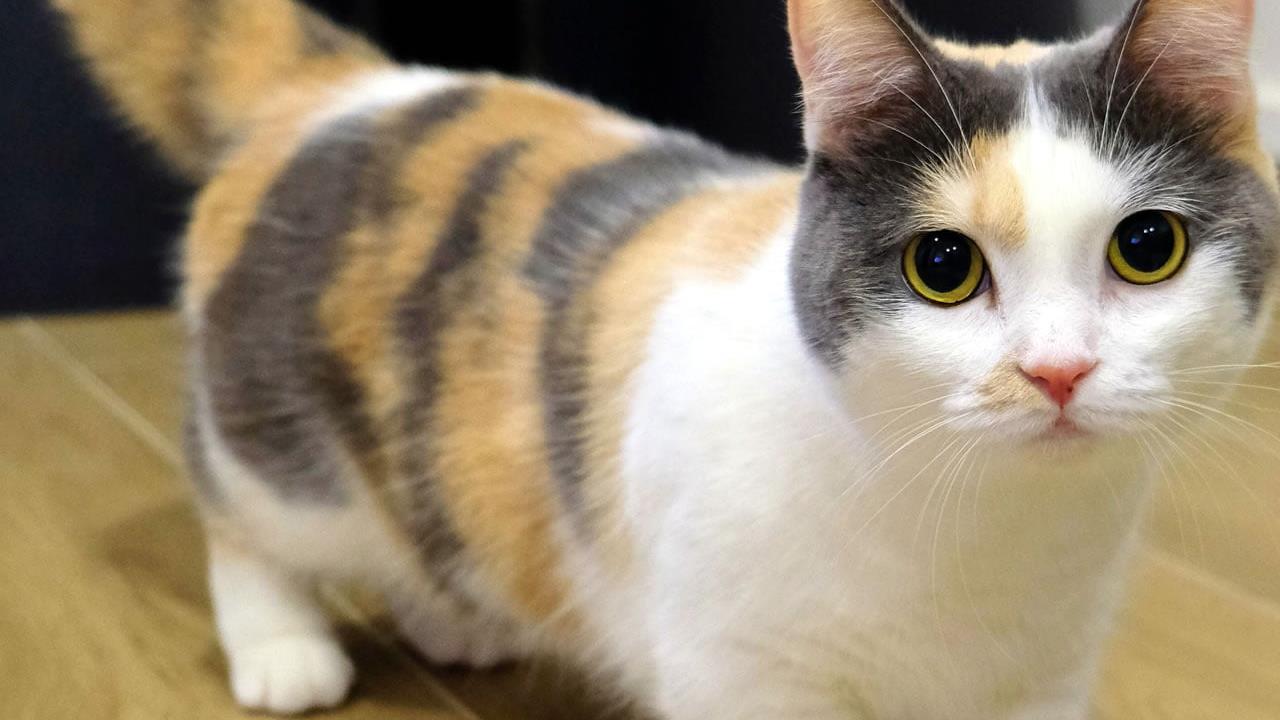
The Munchkin is the short-legged cat that stops people mid-scroll. It is an ordinary domestic cat in almost every way, an average body, a full range of coats and colours, a social and playful streak, sitting on limbs shortened by a naturally occurring mutation. That one feature is also why the breed is genuinely contested. Some registries recognise it, others refuse to on welfare grounds, and in parts of Australia breeding for the trait is restricted by law. If the legs are what draw you in, this is a breed worth reading about properly before you commit.1, 2, 3
Appearance and Physical Characteristics
A Munchkin has disproportionate dwarfism: the legs are shortened while the body stays much like any other domestic cat. The short-legged trait is inherited in a dominant pattern.1
- Size: small to medium. The body is generally an average cat, set on short legs.1
- Adult weight: often around 2.3 to 4.5 kg, varying with sex, build and diet.1
- Height: short in stature because of limb length. There is no single agreed breed height.
- Coat: short or long, in many colours and patterns.1
- Head and eyes: no single exaggerated head shape is required, and appearance can vary because outcrossing has been used in the breed's development.
What photos miss is how these cats actually move. Many Munchkins run, play and climb happily, but they may not clear a tall bookcase in one clean spring. They tend to take the scenic route instead, chair to shelf to windowsill.1
Temperament and Personality
Temperament comes down to the individual cat, early handling, and the home it is raised in. In general descriptions, Munchkins are social, curious and playful, cats that want to be where the activity is and then vanish for a quiet nap in a sunlit corner.1
Is a Munchkin Cat Right for You?
This is the part people skip, and it is the part that matters most. The short legs are real biology, not a costume, and they sit at the centre of an active welfare debate.
The Munchkin is recognised by The International Cat Association (TICA) and has held TICA Championship status since May 2003.1 Against that, the RSPCA in Australia lists Munchkin cats among breeds with significant welfare concerns tied to exaggerated physical features, and notes that affected cats cannot be bred in Victoria under the relevant animal welfare rules on heritable defects.2 Victoria's breeding code names it directly, listing "aplasia or hypoplasia of long bones (Munchkin cats or 'Twisty Cats')" as a heritable defect to be managed under the Prevention of Cruelty to Animals Act framework.4
So a Munchkin can be a friendly, engaging house cat, but you are also taking on a breed built around a trait that reputable bodies flag for its effect on mobility and joints. If you go ahead, buy with your eyes open, and put more weight on how a cat moves than on how short its legs look.
Questions worth asking a breeder or rescue
- Can you meet the parents, or see veterinary records, and watch how they move: walking, turning, jumping down from a low surface?
- What outcrosses are in the lines, if known, and what health screening is done before breeding?
- What support do you offer if a kitten develops mobility or orthopaedic issues?
Health and Lifespan
The central health issue is the same feature people seek out: shortened limbs from a cartilage and bone development difference (chondrodysplasia). The RSPCA notes this may affect mobility and joint development, with potential welfare impacts.2 Because individual risk varies, the practical move is to choose breeders or rescues who prioritise health, then have a vet assess limb function, gait and body condition early and regularly.
You may also see claims online linking Munchkins to specific heart disease. Keep that in perspective. Hypertrophic cardiomyopathy (HCM) is the most common heart disease in cats generally, and many cats show no symptoms early on.5 That said, do not ignore symptoms. If your cat is diagnosed with a heart murmur, or has episodes of open-mouth breathing, collapse or sudden weakness, treat it as urgent and seek veterinary care promptly.6
Diet and Nutrition
Short legs do not change the basics, but weight management carries extra weight here. Extra kilos strain the joints of any cat, and that matters more when limb structure is already atypical, so the goal is a lean, well-muscled cat that moves comfortably.
Ask your vet to help you choose a complete and balanced diet, and to review portions as your cat grows, is desexed, or becomes less active. The WSAVA Global Nutrition Guidelines include practical tools for nutritional assessment in clinic, including body condition scoring and diet-history checklists.7
Care and Housing
Set the home up for short legs and most of the day-to-day sorts itself out. The idea is to give the cat routes rather than cliffs.
- Use steps, not cliffs: provide ottomans, low shelves and stable cat furniture to build routes up and down.
- Choose low-impact play: wand toys, short chases, food puzzles, and training for simple cues.
- Watch the landing: soft rugs where your cat tends to jump down can cut repeated impact.
Training is no different from other cats. Munchkins respond best to calm consistency and rewards they value, usually food, play, or access to a favourite perch. Keep sessions short and end while they are still interested.
Know the emergency signs
Cats stay quiet when they are unwell, and a true emergency often looks like a small shift: breathing that suddenly speeds up, gums that turn pale, a cat that cannot settle, or a body that goes limp when it should resist being moved. Seek urgent veterinary help if you notice any of the following.
- Difficulty breathing: open-mouth breathing, obvious effort, or rapid, laboured breaths.6
- Collapse, fainting, or severe weakness.6
- Uncontrolled bleeding.6
- Seizures, repeated seizures, or a seizure lasting more than a few minutes.6
If you are unsure, ring a vet clinic and describe what you are seeing. Keep your cat warm, quiet and contained for transport.
The Bottom Line
The Munchkin can be a sociable, affectionate cat, and plenty of them get around perfectly well. The short legs are not a gimmick, though. They shape how the cat moves and they sit inside a real welfare debate, restricted from breeding in Victoria and flagged by the RSPCA. If you are drawn to the breed, look for sound, comfortable movement, keep body weight lean, and choose breeders or rescues who treat health as the point rather than an afterthought.2
References
- The International Cat Association (TICA), Munchkin
- RSPCA Australia Knowledgebase, Health and welfare issues associated with exaggerated physical features in cats
- PetMD, Munchkin Cat Breed Health and Care
- Agriculture Victoria, Code of Practice for the Breeding of Animals with Heritable Defects that Cause Disease
- PetMD, Feline Hypertrophic Cardiomyopathy (HCM) in Cats
- TICA, Signs of a medical emergency in cats
- World Small Animal Veterinary Association (WSAVA), Global Nutrition Guidelines
- Agriculture Victoria, Code of Practice for the Private Keeping of Cats

Dog lover and writer at My Pets Australia, sharing practical breed guides and care advice for Australian pet owners.