Manx Cat
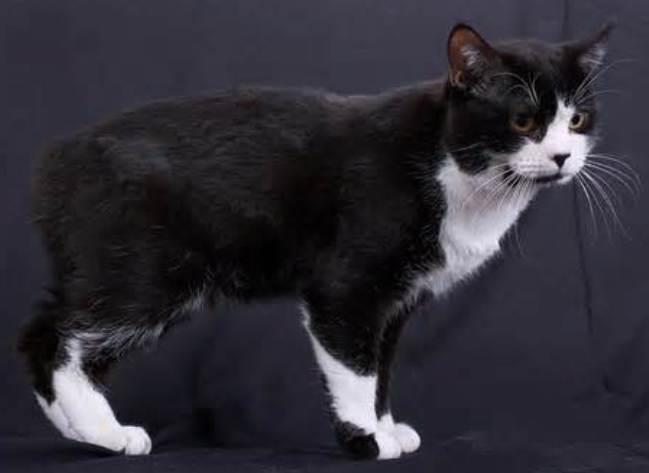
The Manx is the tailless cat from the Isle of Man, a compact, solidly built breed with a rounded outline and famously strong back legs that make it a keen jumper. A well-socialised Manx is even-tempered, people-oriented and playful, and many form close bonds with their household. The missing tail is more than a novelty, though. The same gene that shortens the tail can also affect the spine and nerves, so this is a breed where health and breeding matter as much as looks.1, 2, 4
Origin: Isle of Man1, 2
Typical weight: about 3.5 to 5.5 kg (females often lighter)1
Coat: short (Manx) or long (often called Cymric or Manx longhair by registries)2, 5
Colours: many colours and patterns (rules vary by registry)1, 2
Key feature: tail length varies within the breed, from fully tailless to fully tailed1, 3
History and Origin
The Manx developed on the Isle of Man, where a naturally occurring mutation for a shortened tail became common in the island's cat population. Over time people selectively bred for the look, and the breed became established and recognised by the major cat registries.1, 2
Older accounts sometimes claim an 1884 Australian Government bounty brought Manx cats to Australia, but that story is not backed by primary sources and does not appear in standard registry histories. Treat the neat, dramatic origin tales as folklore unless a reliable source stands behind them.2
Appearance and Physical Characteristics
Manx cats are compact and sturdy, with a round head, round rump and a short back that often forms a smooth arch. The hind legs tend to be longer than the front legs, which lifts the rear slightly and gives the breed its distinctive silhouette and springy power off the ground.1, 2
Not every Manx is completely tailless, and even one litter can produce a range of tail lengths. Breeders use a few common terms:1, 3
- Rumpy: no tail
- Rumpy riser: a small rise of bone or cartilage under the hand
- Stumpy: a short, visible tail
- Longy or full-tailed: a near-normal or normal-length tail
Temperament and Personality
A well-socialised Manx is usually even-tempered, affectionate and playful. Many enjoy interactive play and problem-solving toys, and those strong hindquarters make them enthusiastic jumpers and quick movers around the house.1, 2
Some Manx are talkative in a soft way, more trills and small comments than constant noise, and many bond closely with their people. As with any breed, the individual cat and its early handling matter more than the stereotype.2
Is a Manx Right for You?
The novelty of the silhouette is not the point. The point is health and function, because the tailless trait carries real risk. If you are choosing a kitten or adopting an adult, useful questions to ask include:1, 3, 4
- What tail types are in the parents and litter, and how are they bred to reduce risk?1
- Has the kitten been vet-checked for spinal or neurologic issues, bowel and bladder function, and gait problems?3, 4
- How long are kittens kept before rehoming, so early problems have time to show?6
A healthy Manx is a lovely companion, but this is a breed that rewards a careful buyer and early observation more than most.4
Health and Lifespan
The tailless trait comes from a mutation that affects development of the tail and the end of the spine. In some cats the same change also affects the spinal cord and the nerves serving the back legs, bladder and bowel. This cluster of problems is often called Manx syndrome, or sacrocaudal dysgenesis.3, 4
Because these issues involve nerves and spinal structure, the warning signs look like function problems rather than a quirky walk. Seek veterinary advice promptly if you notice:3, 4
- hind limb weakness, a wobbly gait, or difficulty jumping
- constipation, faecal leakage, or trouble toileting
- urinary leakage, recurrent urinary tract infections, or difficulty urinating
- reduced sensation around the tail base or perineal area
Not every tailless Manx is affected, but the risk is real enough to shape how you choose a kitten and how closely you watch its early development. More severe forms usually show early, and veterinary sources commonly describe symptoms as apparent from birth or kittenhood, which is why some breeders hold kittens longer before rehoming.4, 6
Genetics is the reason pairing matters. The taillessness gene is dominant, but inheriting two copies is typically lethal in the womb. Responsible breeders avoid pairing two completely tailless cats, litter sizes can be smaller in some lines, and many programmes deliberately include cats with some tail length to keep the lines healthier while still producing Manx-type kittens.1, 6
Grooming and Care
Manx coats are dense, and many cats have a double coat. Regular brushing reduces shedding and prevents knots, especially in the longer-coated variety often called Cymric or Manx longhair.1, 4
These cats are naturally solid and can look heavy even when fit, so keep an eye on body condition and ask your vet about diet and activity targets. Some Manx with partial tails can be prone to pain or arthritis in abnormal tail joints, so stiffness or sensitivity around the tail base deserves a check-up.4, 7
Even when the tail is absent or very short, that area can be sensitive. Handle the rump and tail base gently, and teach children not to grab or poke there.2
Manx cats enjoy climbing and short bursts of speed, so provide stable scratching posts, window perches and puzzle feeders. If your Manx has any hind-end weakness, keep jumps lower and add ramps or steps so it can move confidently without strain.2, 4
A Few Things Worth Knowing
- The Manx has gathered plenty of tall tales over the centuries about how the tail was lost. Registries file these as folklore, not history.2
- The real story is more ordinary: a mutation, then generations of selective breeding on a small island population.2
- Tail length runs on a spectrum, so a "Manx" can range from fully tailless to fully tailed.1, 3
The Bottom Line
A Manx in good health is a sturdy, athletic companion, rounded in body, quick on the turn and often quietly devoted to its people. The gene that produces the trademark rump can also produce serious welfare problems, so the breed rewards careful selection and early observation. Choose thoughtfully, handle gently, and let the cat's movement and comfort, rather than the absence of a tail, be the deciding detail.1, 3, 4
References
- Governing Council of the Cat Fancy (GCCF), Manx
- The International Cat Association (TICA), Manx
- PetMD, Manx Syndrome in Cats
- PetMD, Manx Cat Breed Health and Care
- Europetnet, Cymric (long-haired Manx variety) overview
- Europetnet, Manx (genetics and health notes)
- TICA, Manx (handling notes, tailless area sensitivity, breed description)
- GCCF, Manx (tail categories, breeding considerations)

Dog lover and writer at My Pets Australia, sharing practical breed guides and care advice for Australian pet owners.