Kurilian Bobtail Cat
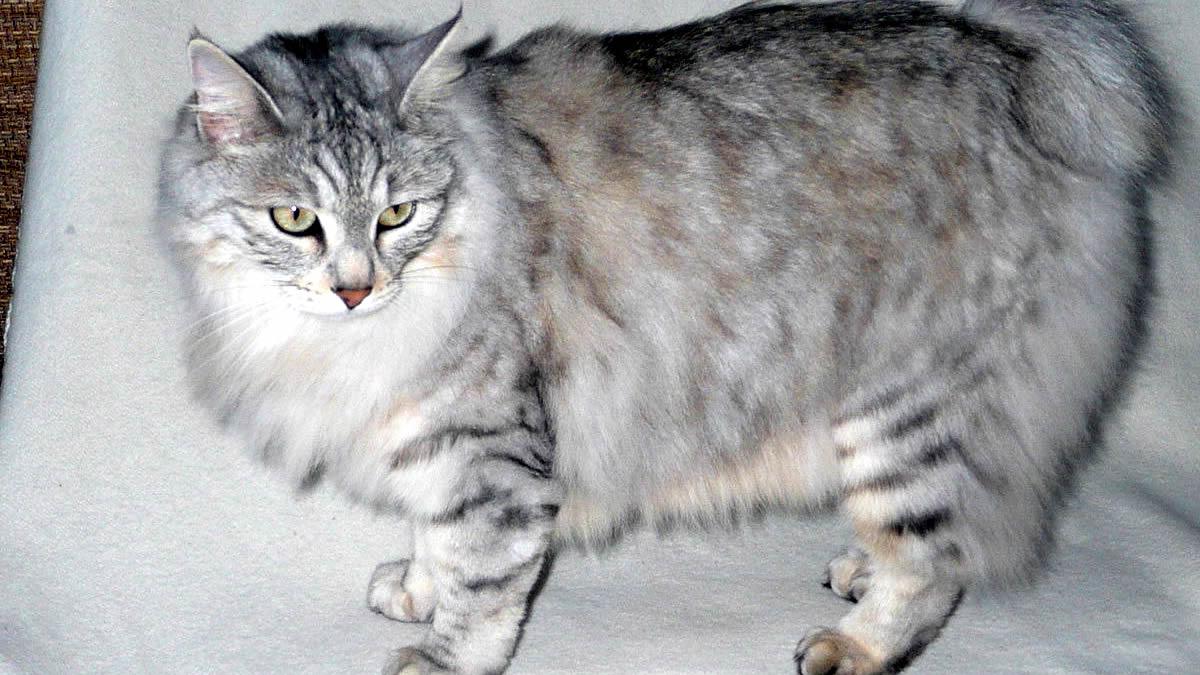
The Kurilian Bobtail is a robust, medium to large cat from the Kuril Islands region of Russia, best known for a naturally short, kinked tail that sits like a pom-pom and is different on every single cat.1, 2 It pairs that headline feature with a compact, muscular body, a thick double coat in many colours, and a gentle, curious nature that makes it easy to live with. As a natural breed it tends to be hardy, with no single widely recognised breed-defining illness.1, 6 The short tail is part of the breed standard, so it is normal from birth. Any sudden change in how that tail moves, or new pain or swelling, is a separate matter and worth a vet check.
History and Origin
The Kurilian Bobtail developed as a natural population on the Kuril Islands and nearby Russian regions, then was later formalised into a pedigree breed. Modern breed organisations describe it as originating from the Kuril and Sakhalin islands area, with cats documented on the islands for centuries.1 The short tail is a natural trait of that island population rather than something bred in for looks.
Appearance and Physical Characteristics
These cats are sturdy and compact rather than rangy, with substantial bone and muscle. The head is a modified wedge with rounded contours, and the overall impression is solid when you pick one up, often heavier than it looks.1
The breed comes in shorthaired and semi-longhaired varieties. Coats are commonly described as soft and silky, usually resistant to tangling, and found in a wide range of colours and patterns depending on registry rules.1
The defining feature is the naturally short tail, made up of kinks and curves, with each cat's tail structure unique. Breed descriptions commonly note a tail under about 12 cm, with a fluffy pom-pom effect in many cats.1, 2 A Kurilian Bobtail's tail is meant to be short and kinked from birth. A tail that was previously comfortable to touch but suddenly becomes painful, limp, swollen, or held oddly needs a veterinary check.
Temperament and Personality
Kurilian Bobtails are typically described as intelligent, gentle, and people-oriented without being fragile or clingy. Many enjoy being near their humans, watching from high places, and engaging in active play that uses the whole body, jumping, climbing, and stalking toys, then pausing to observe the room again.1 Like any breed, individual cats vary. Early handling, a calm home routine, and steady enrichment tend to matter more than labels.
Is a Kurilian Bobtail Right for You?
This is an active, quick-minded cat, and it does best in a home that gives it things to do. If you want a companion that will play, learn, and stay involved in daily life, it suits well. If you would prefer a low-energy lap cat that mostly sleeps, it may be more than you were after. The breed is still relatively uncommon in many countries, so waiting lists can be normal and it is worth taking your time. If you are buying a kitten, look for a breeder who can explain the pedigree and registry paperwork, lets you meet the kitten in a clean home environment, desexes pet kittens or provides a clear desexing agreement along with vaccination and health records, and breeds for sound structure and temperament rather than an exaggerated tail.
Care and Housing
Kurilians adapt to indoor life well, provided they have space to climb, observe, and play. Give them climbing options such as cat trees and shelves, plus hunting-style games like wand toys and puzzle feeders, and they will use most of it. Short training sessions with food rewards or play work well, since many are trainable and benefit from mental stimulation.1
If you offer outdoor access, a secure cat run, or harness training in a safe area, reduces the risks that come with free roaming, including injuries, parasites, and impacts on native wildlife.
Health and Lifespan
As a natural breed, Kurilian Bobtails are often described by breed bodies as generally hardy with few commonly reported breed-specific problems. That does not mean no risk. Cats still develop dental disease, obesity, parasites, injuries, and age-related conditions, and rare genetic problems can exist in any pedigree population.1, 6
In Australia, routine care typically includes desexing, vaccination as advised by your vet, parasite prevention for fleas and worms, grooming, and daily observation for early signs of illness.5 Microchipping and preventative care are part of settling in any new cat.8
Grooming and Care
Most Kurilians do well with regular brushing to remove loose hair and keep the coat in good condition. Semi-longhaired cats generally need more frequent brushing than shorthaired cats, especially during seasonal sheds.1, 5 The coat's tangle-resistant texture keeps matting low for most cats when brushing is routine.
A Few Things Worth Knowing
- Size: Medium to large, with males often heavier than females.1
- Coat: Shorthaired or semi-longhaired, double-coated, and typically low-matting with routine brushing.1
- Tail: Naturally short and kinked, often called pom-pom or fluffy, with structure that varies from cat to cat.1, 2
- Temperament: Usually gentle, social, curious, and active, and quick to learn with rewards-based training.1
- Shows: Kurilians appear in cat fancy registries and shows, where the tail, body, coat, and overall balance are judged against a written standard.1
The Bottom Line
The Kurilian Bobtail is best understood as a hardy island cat shaped by terrain and weather: compact, athletic, and quietly attentive. The bobbed tail is the headline, but the lasting appeal is the mix of sturdiness, social warmth, and an active mind. Give it room to climb, a bit of daily play, and routine vet care, and it is a straightforward cat to share a home with.
References
- The International Cat Association (TICA), Kurilian Bobtail (breed information and characteristics)
- World Organisation of Cats (WOC), Kurilian Bobtail Shorthair (KBS) standard
- World Organisation of Cats (WOC), Kurilian Bobtail Longhair standard
- The Spruce Pets, Kurilian Bobtail cat breed profile (overview and care)
- Agriculture Victoria (Animal Welfare Victoria), Routine health care for cats
- WebMD, What to know about a Kurilian Bobtail (health considerations)
- Wikipedia, Kurilian Bobtail (general background, use alongside primary breed standards)
- Animal Aid (Australia), Your new cat (basic care, microchipping and preventative care)

Dog lover and writer at My Pets Australia, sharing practical breed guides and care advice for Australian pet owners.