Javanese Cat
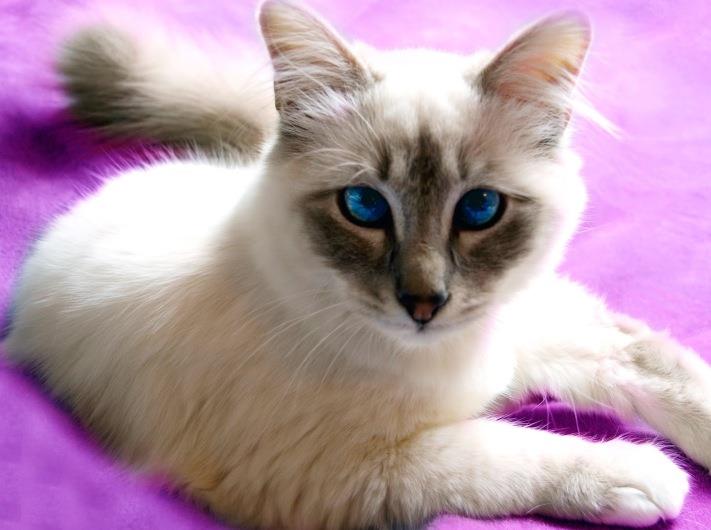
The Javanese is a slender, Siamese-type cat with a silky medium-long coat, a plumed tail, and colourpoint markings that darken the mask, ears, legs and tail against a paler body. It is affectionate, busy and often chatty, the kind of cat that follows you from room to room and joins in with whatever you are doing. The first thing worth knowing is that the name is a source of confusion: different cat registries use "Javanese" to mean different cats, and despite the name it does not come from Java. Get past the label and you have an active, people-focused cat that suits a home where someone is around. If you want a low-contact pet that stays out of the way, this is not it.
History and Origin
The Javanese was developed in North America, not Indonesia. The name follows a long tradition of giving Southeast Asian place-names to elegant Oriental and Siamese-type cats, so it signals a look rather than a true geographic origin.1, 3
In the Cat Fanciers' Association (CFA), "Javanese" refers to the Balinese in specific colourpoint ranges, such as lynx points, tortie points, and red and cream points. Those cats share ancestry with Siamese, Balinese and Colourpoint Shorthair lines.1, 3
Appearance and Physical Characteristics
Most cats described online as Javanese are essentially long-haired Siamese-type cats with colourpoint patterning. Look for a fine-boned, athletic build, a wedge-shaped head, large ears, almond-shaped blue eyes, and a silky coat that lies close to the body rather than standing off in a thick fluff.3, 2
This is generally a medium cat, with many adults falling roughly in the 2 to 5 kg range, though individuals vary. Colour terminology shifts by registry. In CFA usage, "Javanese" covers non-traditional Balinese and colourpoint longhair colours such as lynx points (tabby striping in the points), tortie points, and red and cream points, among others.2, 1, 3
Temperament and Personality
This is typically a cat that stays close to the household's centre of gravity. Many are sociable, quick to investigate anything new, and keen to join in, especially when you are moving about the house. Vocalising is common, though the volume and frequency vary between individuals and lines.1, 2
Because they are bright and active, boredom shows up fast. A quiet house with little interaction can produce nuisance behaviours such as night-time zooms, attention-seeking calls and creative climbing. A busier home, or one that treats play as a daily ritual, tends to suit them well.2
Is a Javanese Cat Right for You?
This breed type thrives in homes where someone is around, or where the cat has safe social company. A second compatible cat can help, if introductions are done carefully. They often do well with respectful children, provided the cat has high perches and quiet retreat spaces. If you want a low-contact, rarely-seen cat, this is usually not the right match.2
Grooming and Care
The coat is fine and silky, and in many lines it carries little undercoat, which can mean fewer tangles than dense double-coated breeds. It is still hair, though, and it still knots if neglected.2
- Brush and comb: aim for a thorough session at least weekly, and more often during seasonal shedding or if your cat is prone to knots.2
- Tail and trousers: check these areas for small mats, which form quietly and tighten over time.
- Nails, ears and teeth: keep nails trimmed and ask your vet about dental care that suits your cat's risk level and diet.
Health and Lifespan
Many Javanese cats live 10 years or more, with longer lives possible under good care.2 Claims that Javanese cats commonly get hip dysplasia are often overstated. Hip dysplasia can occur in cats, but it is not one of the signature problems most associated with Siamese-type lines. If your cat shows stiffness, reluctance to jump, or pain on handling, treat it as an individual medical issue rather than a breed certainty.4
As with many pedigree populations, health risks depend heavily on the breeding line and the size of the gene pool. Siamese-related families are sometimes discussed in connection with certain inherited conditions, and some heart disease such as hypertrophic cardiomyopathy has been reported across cat populations. The practical approach is simple: choose breeders who health-test where tests exist, keep regular veterinary checks, and act early when you notice subtle changes in breathing, stamina, appetite, weight or mobility.5
Diet and Nutrition
There is no single breed diet that fits every Javanese. What matters is body condition and routine. These cats often look athletic even when carrying extra weight, so check regularly by feel, where the ribs should be easily felt under a light fat covering, and adjust portions with your vet's guidance.
For vaccinations, vets generally tailor schedules to lifestyle and local risk. Widely used guidelines describe core protection for key viral diseases and add others based on exposure, for example whether the cat goes outdoors, mixes with unknown cats, or lives in a multi-cat household.6
Training and Exercise
Many Javanese-type cats learn quickly, especially when training is built around food rewards, play and short sessions. They tend to enjoy puzzle feeders, wand-toy hunts, and climbing routes that let them travel above floor level. Leash training is possible for some individuals but is not essential. What matters is predictable, daily outlets for movement and curiosity.
A Few Things Worth Knowing
- "Javanese" means different things depending on which registry you read.
- In Australia you may see "Javanese" used in the context of the Oriental Longhair (Javanese) naming in some cat fancy materials and standards lists, which is a separate convention from the CFA's Javanese division within Balinese colourpoints.7, 8
- If you are buying a kitten, ask which registry the breeder uses and what the papers say, whether that is Balinese, Javanese division, Oriental Longhair or Javanese, Colourpoint Longhair, and so on.
- The cat's actual needs, meaning diet, enrichment, grooming and vet care, matter more than the label, but the label can help you interpret breed standards and health-testing practices correctly.
The Bottom Line
The Javanese name sits over a slim, colourpoint cat with a silky coat and a busy mind, often affectionate, often vocal, and rarely content to be background scenery. If you can offer steady interaction, daily play and simple coat care, they tend to settle into the household rhythm with a graceful, watchful presence that is always ready to move.
References
- The Cat Fanciers' Association (CFA), The Javanese (breed article)
- The International Cat Association (TICA), Balinese (breed information)
- The Cat Fanciers' Association (CFA), Balinese (history and standards context, including Javanese division)
- International Cat Care, Hip dysplasia in cats
- VCA Animal Hospitals, Hypertrophic cardiomyopathy (HCM) in cats
- AAHA, 2020 AAHA/AAFP Feline Vaccination Guidelines
- GCCFSA, Breed standards links (uses Australian Cat Federation standards, includes Oriental Longhair/Javanese listing)
- Feline Control Council of Queensland, ACF breed standards links (includes Oriental Longhair (Javanese))
- CFA, Pointed cats overview (context on Balinese and Javanese divisions and colourpoint terminology)

Dog lover and writer at My Pets Australia, sharing practical breed guides and care advice for Australian pet owners.