How to Teach Your Pets Basic Commands
Basic commands give you a small set of reliable behaviours you can call on when it matters: at the front door, on a lead, near other dogs, or around food and hazards. They will not make an animal perfect, and they are not about strictness. They are about clarity, so the same cue always means the same thing. The safest and most durable way to build them is reward-based training, which means setting your pet up to succeed and then reinforcing what you want to see again.1, 2, 3
Why teaching commands matters
Most emergencies are ordinary seconds: a gate left ajar, a visitor arriving, a dog spotting wildlife, a dropped pill on the floor. Cues like come, stay, and leave it give you a way to interrupt a situation before it turns into a vet visit, or worse.
Beyond safety, training is about behaviour you can live with. When the same cue always means the same thing, and the reward arrives at the right moment, animals learn what works in your home and what does not. Reward-based methods are widely recommended because they are effective and avoid the welfare risks linked to aversive tools and punishment-based approaches.1, 2, 3
Good training also creates a quiet rhythm: cue, behaviour, reward, release. Over time, your pet starts offering the behaviours that pay off. That predictability tends to make handling easier for everyone, especially in distracting places like parks, footpaths, and waiting rooms.
Understanding your pet's capability and limits
Learning speed varies wildly between individuals. Breed tendencies can influence attention, arousal, and motivation, but they do not override the basics: clear cues, consistent reinforcement, and practice in small steps.
Dogs are often bred for cooperative work with humans, so cues like recalls and stays can come together quickly with practice. Cats can also learn cues and routines, particularly with food or play as reinforcement, but they are usually less interested in repetition and may prefer shorter, calmer sessions.6
Age changes the approach, not the outcome. Younger animals often learn quickly because everything is new and the brain is primed for forming habits. Older pets can still learn; the training just needs more patience, clearer set-ups, and rewards that genuinely matter to that individual.4
Positive reinforcement: the centre of good training
Reward-based training means you reinforce behaviours you want to keep seeing, and you arrange the environment so the unwanted behaviour becomes less rewarding. The RSPCA describes this as rewarding desirable behaviour and generally ignoring unwanted behaviour, rather than using punishment.2, 5
A reward is anything your pet will work for in that moment. Common options include food, toys, play, pats, and praise. Food tends to be the clearest and easiest to deliver with good timing, especially in early training.5
- Food: small, soft, and quick to eat, so you can keep moving.
- Toys and play: great for high-energy dogs (and some cats), but harder to use with perfect timing.
- Praise and patting: useful, but not always powerful enough on its own in distracting places.
Methods that rely on fear, pain, or intimidation can carry welfare risks and may worsen underlying anxiety or reactivity. Major veterinary behaviour bodies recommend reward-based methods and advise against aversive approaches for training and behaviour modification.1, 3
Essential commands to start with
These cues cover most everyday situations. Keep training sessions short, repeatable, and easy. A minute done well beats ten minutes of frustration.
Sit
What it is for: greetings, pausing at kerbs, calming the front-door moment.
- Hold a treat at your pet's nose, then lift it slightly so the head follows and the bottom drops.
- The instant they sit, mark it ("yes" or a click), then reward.
- Add the cue "sit" just before you lure, then fade the lure over time.
Stay
What it is for: doors, gates, visitors, keeping paws out of trouble.
- Ask for a sit (or a stand, whichever is steadier for your pet).
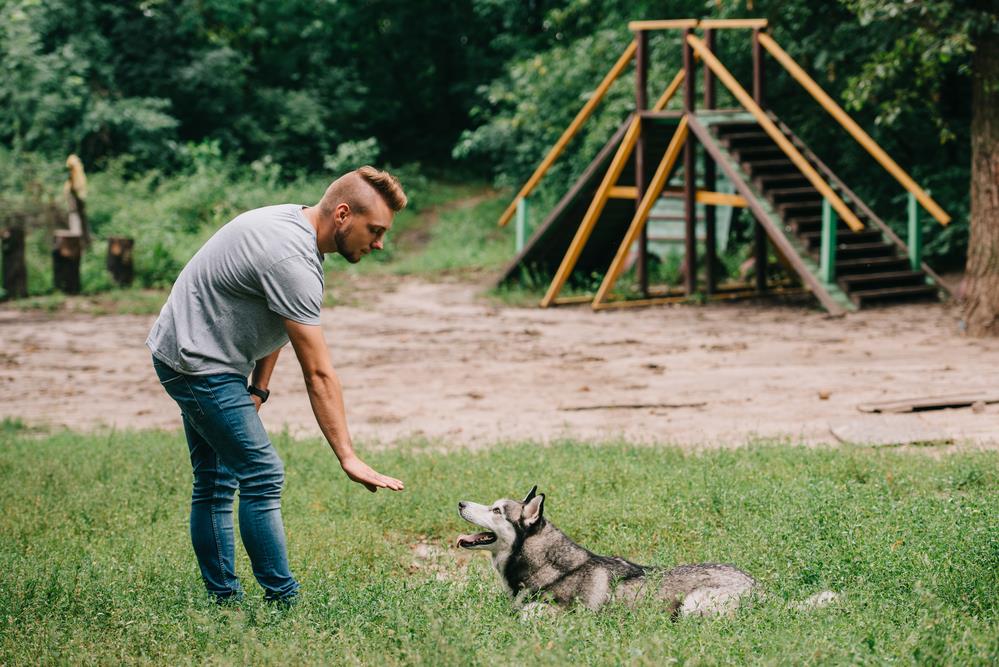
- Show an open palm, say "stay", pause for one second, then reward while they are still in position.
- Build duration first, then distance, then distractions, one small step at a time.
Come (recall)
What it is for: calling your dog away from traffic, wildlife, other dogs, and trouble you have not seen yet.
- Start on a lead or long line so your dog cannot rehearse ignoring you.
- Say "come" once, then make it easy: move backwards, get low, and reward generously when they arrive.
- Practise in low-distraction places before expecting it to work at the park.
Leave it
What it is for: dropped food, rubbish, bait risks, pills, toxic items.
- Place a low-value treat in a closed fist. Present it and say "leave it".
- Wait for the moment your pet stops nosing or licking and pulls back, then mark and reward from your other hand.
- Gradually move to an open hand, then to items on the floor, always starting easy.
How to run sessions that actually work
Consistency is less about intensity and more about repetition in the same language. Use the same cue, the same hand signal (if you use one), and reward the same behaviour every time, especially at the start.
- Keep it short: aim for 1 to 5 minutes, then stop while it is going well.
- Train before meals: a slightly hungry pet is often more motivated.
- Reward promptly: the reward needs to land within a second or two of the behaviour.
- Change one thing at a time: duration, distance, or distractions, but do not stack them too early.
- Finish with an easy win: one cue your pet can do confidently, then a calm break.
Dealing with common challenges
If your pet will not focus, the environment is usually too hard or the reward is not strong enough. Move further away from distractions, train after exercise rather than before, and use higher-value food for harder situations.
If they do it at home but not outside, that is normal. Animals do not automatically generalise. Re-train the cue in the new place as if it is brand new: short distance, easy set-ups, frequent rewards.
You may also be told to "show them who is boss". Dominance-based explanations for everyday behaviour problems are widely criticised by veterinary behaviour experts. Focus on reinforcement, clear consequences, and managing the environment so your pet rehearses the behaviour you want.7
Get help early if there is growling, snapping, biting, or repeated attempts to bite; if your pet panics, freezes, or becomes highly distressed during training; if you suspect anxiety, fear, or reactivity is driving the behaviour; or if basic management is not keeping people or animals safe. Look for a trainer who uses reward-based methods and can explain their approach plainly. Your vet can also help rule out pain or illness that may be affecting behaviour.
Keeping commands reliable over time
Once a cue is learned, it still needs occasional payment. Many owners phase treats too quickly, then wonder why the behaviour fades. The simplest approach is to keep rewards unpredictable, sometimes food, sometimes play, sometimes praise, so the cue stays worth doing.5, 8
References
- American Veterinary Society of Animal Behavior (AVSAB), Position statements (including Humane Dog Training, 2021)
- RSPCA Knowledgebase, What is reward-based dog training and why does the RSPCA support it?
- RSPCA Australia, What you need to know about positive dog training
- RSPCA Australia, Make sure you teach that 'old' dog some tricks
- RSPCA Australia, The do's and don'ts of training your dog
- The International Cat Association (TICA), Yes, you can train a cat (clicker training basics)
- AVSAB, Dominance position statement (via AVSAB position statements page)
- RSPCA Pet Insurance, Positive reinforcement training (maintaining behaviour, reducing food rewards over time)

Dog lover and writer at My Pets Australia, sharing practical breed guides and care advice for Australian pet owners.