Cymric Cat
The Cymric is, in plain terms, the long-haired Manx: a rounded, heavy-boned cat from the Isle of Man whose most famous feature is a tail that might be missing, stubby, or full length. What owners tend to love is the temperament. Most Cymrics are calm, people-oriented cats that settle close to you rather than tear around the house, and many are talkative in a soft, trilling way. They are also handsome, plush-coated, and genuinely good with families. The one thing to understand before you fall for a tailless kitten is that the same gene behind the look carries real health considerations, so lineage matters more than silhouette.1, 2, 3
Quick facts
- Also known as: Longhair Manx (many registries treat the Cymric as the long-haired Manx variety).1, 2
- Origin: Isle of Man (tailless Manx cats); the long-haired variety was developed and standardised later in cat fancy breeding programs.1, 2
- Size and weight: Medium, heavy-boned, commonly around 3.5 to 5.5 kg depending on sex and build.3
- Coat: Semi-long to long and plush, needs regular combing to prevent knots.1
- Tail: Can be tailless, short, or full length (tail types vary within the Manx and Cymric group).1
- Lifespan: Often into the mid-teens, with breed sources commonly citing 16 years or more as achievable with good care (individual variation applies).1
History and Origin
The Cymric's story starts on the Isle of Man, where a naturally occurring mutation produced cats with shortened tails. On an island with a small cat population, that trait became common over time.1, 3
In modern registries, the name Cymric is widely used for the long-haired form of the Manx. Some organisations treat it as a separate breed name, while others fold it into the Manx standard and recognise coat length as the key difference.1, 2
Appearance and Physical Characteristics
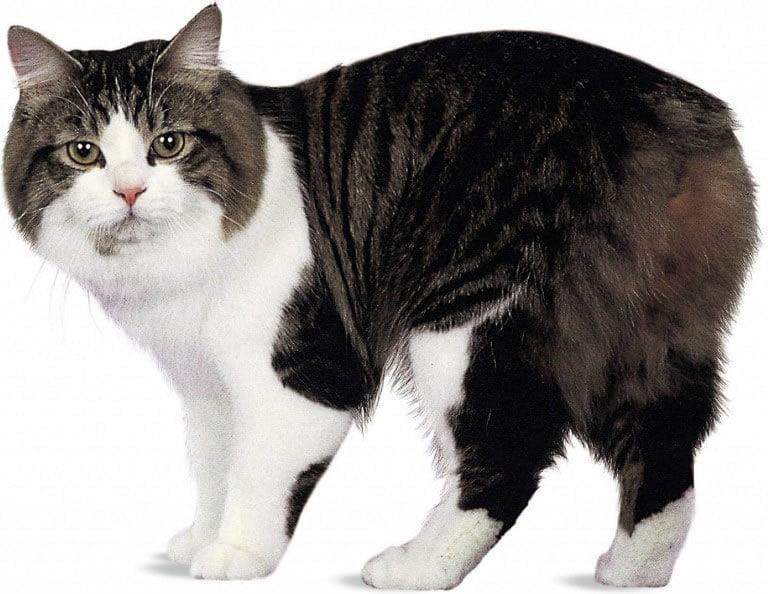
Seen in profile, the Cymric is all curves: a round head, round eyes, and a compact, muscular body with a short back and strong hindquarters. The hind legs are typically longer than the front, which can give a slightly raised rump and an efficient, springy jump.1, 3
The coat is semi-long to long and plush rather than silky and flat, with more feathering around the breeches and a fuller ruff in some cats. Colours and patterns are broad across registries, though show standards may exclude particular colour ranges depending on the organisation.1, 3
Not every Cymric is completely tailless. A litter can include cats with no tail, a small rise of bone or cartilage, a short tail, or a full tail. Tail length does not predict temperament, but it can matter for breeding decisions and for careful handling around the rump, where nerve endings may be less protected.1, 3
Temperament and Personality
Most Cymrics are even-tempered, people-oriented cats that fit into family routines and enjoy interactive play. Many are good jumpers and problem-solvers, and some are quite conversational, offering soft trills or talkative meows, especially around mealtimes.1, 3
They are often fine with children and other pets when introductions are slow and respectful. As with any cat, the individual matters: early handling, the home environment, and whether the cat feels secure will all shape what you see day to day.1
Is a Cymric Right for You?
If you want a steady, affectionate cat that enjoys company and does not demand constant activity, the Cymric fits well. The honest caveat is the genetics. Because Cymrics share the Manx gene pool, choosing one responsibly means buying from a breeder who understands the tailless mutation and screens for it, then staying alert to early health signs. This is not a breed to pick up cheaply on impulse from an unknown source. Get that part right and you have a rewarding, long-lived companion.3, 4
Health and Lifespan
Cymrics can live long, sturdy lives, but the tailless mutation deserves respect. The same gene that shortens the tail can be associated with congenital spinal and neurological abnormalities, often discussed under the label Manx syndrome, including sacrocaudal dysgenesis. These issues can contribute to mobility problems and, in some cats, urinary or faecal incontinence.4
Signs worth a prompt veterinary check include:
- A wobbly gait, weakness in the back legs, or reluctance to jump.
- Constipation, straining, or unusually infrequent stools.
- Urinary accidents after litter training is well established.
- Visible discomfort when the rump area is touched.
These signs do not automatically mean a serious condition, but in tailless breeds they are worth discussing with a vet, especially in kittens and young cats, where congenital issues can become clearer as they grow.4
The tailless trait is inherited and closely tied to the spine and nerves of the tail and pelvis. Ethical breeders plan matings to reduce the risk of severe defects and are open about what tail types occur in their lines, what screening they do, and what support they offer if a kitten develops problems.3, 4 If you are choosing a kitten, ask for a veterinary record of health checks, vaccination status, and clear guidance on when to recheck growth and gait. A good breeder will not brush off questions about bowel habits, mobility, or continence.
Grooming and Care
A Cymric's coat usually stays in good condition with regular combing, but it can knot quietly around the breeches, belly, and underarms. A weekly comb is a sensible baseline, increasing during seasonal shedding.1
- Coat: Comb through to the skin, do not just skim the top layer.
- Nails: Trim as needed, especially for indoor cats who do not wear them down outdoors.
- Teeth: Aim for routine dental care; your vet can advise on brushing and check-up frequency.
- Weight: They are compact and heavy-boned, which can read as chubby, so watch body condition rather than the number on the scales.1
Care and Housing
Cymrics respond well to calm, consistent routines and reward-based training with treats, play, and praise. Short sessions suit cats best: a minute or two, then a break, then another go. The aim is less about obedience and more about building predictable cues for handling, carriers, scratching posts, and gentle grooming. For socialisation, steady exposure beats sudden immersion, so let the cat choose distance, provide hiding spots, and pair new experiences with something pleasant like a favourite food or a toy.
Cymrics are capable hunters, but in Australia the safest and simplest approach is containment: indoors full time, or indoors with access to an escape-proof outdoor run such as a catio. This reduces risks like cars, fights, poisoning, and snakebite, and it also reduces hunting pressure on native wildlife.5, 6, 7 If full containment is not realistic straight away, at a minimum keep cats in overnight and around dawn and dusk, when many native animals are most active.8
The Bottom Line
The Cymric is a rounded, steady cat with a thick coat and a tail that may be absent, partial, or fully present. The important part is not the shape, it is the lineage. Choose a Cymric from a breeder who understands Manx genetics, stay alert to early health signs, and you give the cat the best chance at a long, uncomplicated life.1, 4
References
- The International Cat Association (TICA), Cymric
- Cat Fanciers' Association (CFA), Manx article (includes Cymric and Longhair Manx history)
- Governing Council of the Cat Fancy (GCCF), Manx breed profile (origin, build, tail types, notes on health risk with an overly shortened back)
- MSD Veterinary Manual, Congenital and inherited spinal cord disorders (includes sacrocaudal dysgenesis in Manx cats)
- RSPCA Pet Insurance (Australia), Why you should keep your cat indoors
- RSPCA WA, How to contain your cat to your property
- Agriculture Victoria (Animal Welfare Victoria), Keeping your cat safe at home (last updated 28 Jan 2026)
- Australian Government (DCCEEW), Protecting our wildlife: responsible pet ownership

Dog lover and writer at My Pets Australia, sharing practical breed guides and care advice for Australian pet owners.