Choosing the Right Leash for Your Pet
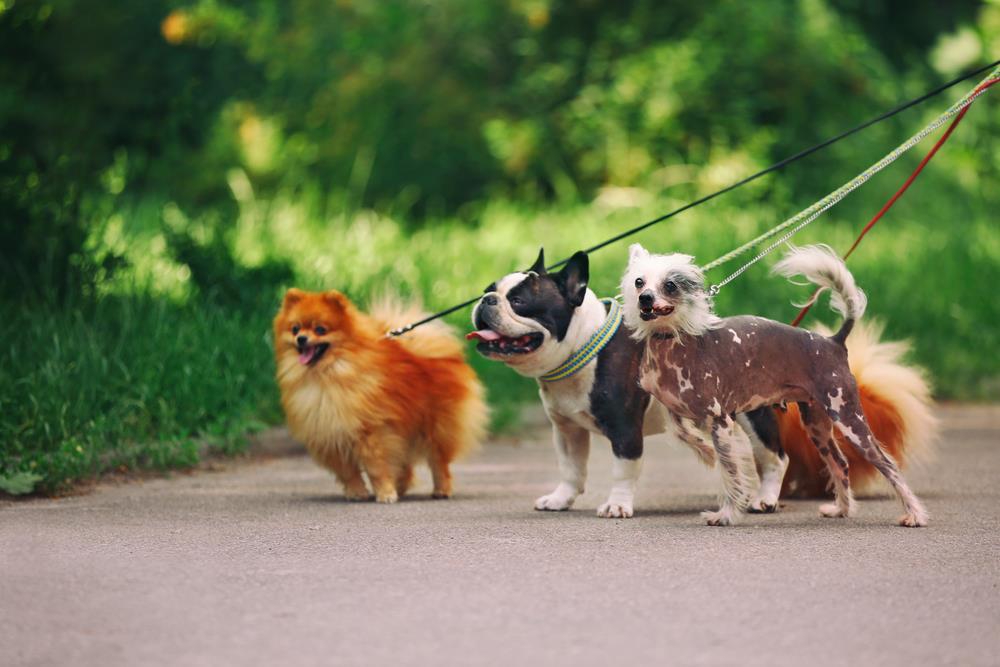
A dog lead does one simple job well: it keeps your dog connected to you and gives you control near roads, wildlife, other dogs, and food scraps on the footpath. The right one gives you that control without loading up your dog's neck or encouraging it to pull. Matching lead type, length and hardware to your dog's body and behaviour makes everyday walks safer and calmer, and for some dogs it means clipping to a harness rather than a collar. Here is how to make that match.1, 2
Why the lead matters more than most people expect
A lead does more than hold a dog. It transfers force, sometimes suddenly, through a clip, a strap, and whatever the dog is wearing. When a dog hits the end of the lead at speed, or is corrected with a jerk, that load concentrates fast around the attachment point.
Research measuring pressure on a simulated neck model shows that collars can apply very high pressures when force is added through the lead, including during jerks.5 Other studies link collar pressure with increases in intraocular pressure (IOP) when dogs pull, which matters for dogs with glaucoma risk, thin corneas, or other eye disease concerns.6
Start with the dog in front of you
Before buying anything, take a plain look at what you are managing on a normal walk: weight, strength, reactivity, prey drive, and how often the dog hits the end of the lead. The best lead is the one you can hold securely, that does not encourage pulling, and that does not load up the dog's neck.
- Small dogs: avoid heavy clips and thick webbing that drags on the neck and shoulders. The RSPCA notes that thick leads with large clips can be too weighty for small dogs and put undue pressure on the neck and spine.1
- Strong pullers: plan for a harness setup and training support, rather than stronger collars or harsher tools.1, 7
- Brachycephalic breeds (flat-faced dogs): be especially cautious about neck pressure. Evidence suggests collars can raise IOP in brachycephalic dogs even under light conditions, and may also affect breathing rate in some contexts.8
Lead length: what works on real streets
For everyday urban walking, a fixed lead around 2 metres is a practical baseline: long enough for sniffing and a normal gait, short enough for quick control at crossings and around other people. RSPCA guidance for teaching loose-lead walking also points to leads of approximately 2 metres.1
If you need more distance for training recalls or calm decompression sniffing, swap to a long line (often 5 to 10 m) in open areas where it is safe and permitted, and where you can manage the line without tangling or burns. Keep it off busy footpaths and away from other dogs unless you can gather it quickly.2
Lead types and where each one fits
Standard fixed-length lead: this is the steady workhorse for daily walks, with consistent feedback, fewer moving parts, and easier handling near roads. For most households it is the default option for safety and training.1
Adjustable (multi-length) lead: useful when you move through mixed environments such as street, park edge and cafe strip, because you can shorten up without wrapping loops around your hand. Choose one with solid stitching and hardware rated for your dog's size.
Retractable lead: these trade certainty for distance. The line is often thin, the stopping distance is longer, and the dog can reach hazards before you can shorten up. The RSPCA does not recommend extendable or retractable leads because they give less effective control and can allow dogs to get too close to dangers, including traffic, or to other animals.1 They also bring specific injury risks: the cord can cause rope burns and cuts if it wraps around skin, and dogs can be jolted when they hit the end at speed, especially if attached to a collar.2, 4
Training leads and long lines: a long line is not a shortcut for control, it is a training tool for safe practice at distance. Used well, it helps build recall and calm behaviour while keeping a physical connection. Used poorly, it becomes a tripwire. For pulling issues, focus on loose-lead walking training and consider a front-attach harness, rather than relying on a shorter lead to hold the dog in place.1, 7
Collar versus harness: where the force goes
When a dog pulls and the lead is clipped to a collar, the load is concentrated around the neck. Studies have measured collar-related neck pressure and shown it can become very high under pull and jerk conditions, with potential welfare implications.5
Research comparing restraint setups shows meaningful differences in how dogs pull and how tension is applied, depending on collar versus chest harness use.7 Separately, controlled work has found that pulling against a collar can significantly increase intraocular pressure, while a harness did not show the same effect in that study.6
If your dog is a persistent puller, or has airway or eye concerns, a well-fitted harness is often the safer starting point. The RSPCA also notes that front-attach harnesses are effective and generally well tolerated, and it discourages aversive tools like check chains and prong collars due to pain, distress, and the risk of damage.1
Materials and hardware: comfort is physics
Material choice is mostly about grip, wear, and how the lead behaves under sudden load.
- Nylon webbing: durable and common, but it can burn hands if you grab moving webbing or gather it too fast. Consider gloves for long-line work.
- Leather: comfortable in hand and often kinder on skin, but it needs care and can be compromised by chewing or soaking.
- Biothane or PVC-coated webbing: easy to clean and slides less into fibres, and it can be a good long-line option in wet or sandy places.
- Chain: chew-resistant but heavy and less forgiving, and not ideal for daily walking comfort.
Match the clip size to the dog. Too heavy for a small dog and you add strain; too small for a big dog and you risk failure. The RSPCA explicitly warns against mismatched lead thickness and clip size for both small and large dogs.1
Safety features that genuinely help
Reflective stitching or panels make the human-and-dog silhouette easier to read in headlights and bike lights, especially at crossings and driveways. Look for a handle that will not twist out of your grip when the dog lunges; padding helps on long walks, but shape and traction matter more than softness. Inspect stitching and the clip gate regularly, and retire any gear with frays, cracks, or sticky clip action.
Common mistakes that create injuries
- Wrapping the lead around hands or fingers: a sudden pull can injure soft tissue or fracture fingers and wrists.
- Letting a retractable line run across paths: it becomes a near-invisible trip line for cyclists, kids, and other dogs.2, 4
- Using the lead to correct with jerks: jerks increase peak forces and can sharply increase pressure on the neck when the lead is attached to a collar.5, 9
Price and looks: spend where it counts
Pay for the parts that fail first: the clip, the stitching, and the webbing quality. A patterned lead is fine, but choose visibility and handling over novelty. If a lead does not feel secure in your hand inside the shop, it will not feel secure when a kangaroo bolts out of the scrub line at dusk.
References
- RSPCA Australia Knowledgebase: What equipment should I use when teaching my dog or puppy to walk on a leash?
- City of Charles Sturt (SA): Retractable leads and why they are not a good idea
- FOUR PAWS Australia: Which leash suits which dog?
- MSPCA-Angell: Retractable Leashes
- Carter AJ et al. (2020). Canine collars: an investigation of collar type and the forces applied to a simulated neck model (Veterinary Record). PubMed
- Pauli AM et al. (2006). Effects of neck pressure by a collar or harness on intraocular pressure in dogs. PubMed
- Shih H-Y et al. (2021). Dog pulling on the leash: effects of restraint by a neck collar vs. a chest harness (Frontiers in Veterinary Science)
- Bailey et al. (2025). Effect of a collar and harness on intraocular pressure and respiration rate of brachycephalic and dolichocephalic dogs. PubMed
- Ogburn et al. (2020). Pressure and force on the canine neck when exercised using a collar and leash. PubMed

Dog lover and writer at My Pets Australia, sharing practical breed guides and care advice for Australian pet owners.