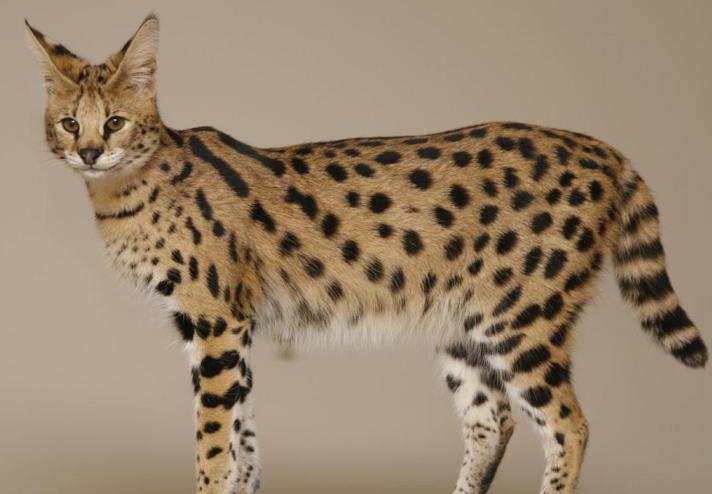
Cat Vision - how they see in the dark.
Watch a cat cross a dark hallway without bumping a single chair leg and it looks like night vision. The green-gold flash you catch in torchlight is part of the same system. Cats do not see in total darkness, but at dusk, dawn, and in a dim room they see far better than we do, thanks to some clever eye anatomy and a set of touch-sensors on the face. The trade-off is that the features helping them in low light also cost them sharpness at distance and a fuller sense of colour. Here is what is actually going on.
Can cats really see in the dark?
Not in complete darkness. Cats still need some light to form an image. What they have is strong low-light vision, often estimated at around 5.5 to 7 times better than humans in dim conditions, depending on the source and how it is measured.1, 2
The advantage is most noticeable at twilight and in low indoor light, when their eyes can gather and reuse scarce photons that human eyes simply waste.
The anatomy of a cat's eye
A cat's eye is built to make the most of low light and sudden movement. A few features do most of the work.
- Large cornea and wide pupil: more incoming light reaches the retina when the pupil dilates in dim conditions.1
- Vertical slit pupils: in bright daylight the pupil can close down to a narrow slit, limiting light and sharpening depth of field; at night it opens wide again.1
- Rod-heavy retina: rod cells are the low-light and motion specialists. Cats have a higher proportion of rods than humans, which helps them detect movement in dim light even if fine detail is softer.2, 3
- Tapetum lucidum: a reflective layer behind the retina that bounces light back through the photoreceptors for a second pass.3, 4
Rods, rhodopsin, and second chances
In low light the retina leans heavily on rod cells. Rods are packed with light-sensitive pigment (including rhodopsin) that reacts to very small amounts of light, which is why shapes and movement can pop out for a cat when our view is already fading.2
The tapetum lucidum makes this system more efficient by reflecting unabsorbed light back across the retina. It is not magic. It is a second chance for the rods to catch what they missed the first time.3, 4
That reflective layer is also why a cat's eyes appear to glow. The bright return flash in your headlights or phone torch is light bouncing off the tapetum lucidum and back out through the pupil. The eye is not producing light of its own; it is a by-product of the same layer that boosts low-light sensitivity.3, 4
The tapetum comes with a cost. It increases sensitivity in dim light, but it can also scatter light slightly, so the image can be a little less crisp than it would be without a reflector behind the retina. This is one reason cats are better at detecting movement than reading fine detail at distance.3, 5
Cat vision versus human vision
Cats and humans are tuned for different jobs.
- Low-light performance: cats see markedly better in dim light, but still not in total darkness.1, 2
- Field of view: cats have a wider visual field (often cited around 200 degrees) than humans (around 180 degrees).1
- Sharpness: cats generally see less fine detail at distance than humans. Many summaries place cat acuity somewhere around 20/100 to 20/200, compared with typical human 20/20 vision.5
- Motion sensitivity: cats are highly responsive to movement, particularly in low light, which suits stalking and pouncing.2
Do cats see colour?
Cats are not colour blind in the black-and-white sense, but their colour world is reduced compared with ours. Most evidence-based overviews describe cats as having dichromatic colour vision: they can distinguish some blues and yellows, while reds and greens are harder to separate and may look muted or greyish-brown.1, 2
This is why a toy's motion and contrast often matter more than its colour. A bright blue object tends to stand out more reliably than a red one, especially in dim light.
How cats' eyes adjust to changing light
The pupil does much of the fast work. In low light it dilates dramatically to let more light in; in bright conditions it contracts into a thin slit, reducing glare and protecting the light-sensitive retina.1
Dark adaptation also involves retinal chemistry, including the regeneration of light-sensitive pigments in rods. This takes time. Cats do not instantly switch to night mode, but they do reach usable low-light vision sooner than we do in many everyday settings.2
Whiskers finish the job vision starts
Whiskers are not vision, but they change how seeing looks. These specialised sensory hairs (vibrissae) are rooted in follicles rich with nerves, and they help cats map nearby space through touch and subtle air movement, especially when it is too dark or too close-up for the eyes to do clean work.6
It is one reason a cat can move neatly around chair legs at night. Vision handles the broader layout, while whiskers confirm what is right in front of the muzzle.
How vision supports hunting
Cats are crepuscular hunters by heritage, often most active at dawn and dusk. Their visual system fits that window: wide pupils, rod-heavy retinas, and a reflective tapetum that makes the most of low, slanting light, while motion sensitivity helps them track quick prey movements.2, 3
The trade-offs are real. In full daylight and at longer distances, cats rely more on movement cues than fine detail, and many will approach close before committing to a pounce.5
Common misconceptions
- "Cats can see in pitch black." They cannot. They need at least a little ambient light.1, 2
- "Cats only see in black and white." Cats do see colour, but in a more limited range than humans.1, 2
- "Eye shine means their eyes make light." The glow is reflected light from the tapetum lucidum, not light produced by the eye.3, 4
Keeping a cat's vision healthy
Most vision problems are subtle at first. A cat often compensates by relying more on whiskers, memory of the home layout, and hearing, so it pays to watch for small signs.
- Watch for new cloudiness, redness, persistent discharge, or a visible third eyelid.
- Notice behaviour changes: misjudging jumps, hesitating on stairs, or startling when approached from the side.
- Keep home lighting gentle at night (a low night-light can help older cats), and avoid shining bright torches directly into the eyes.
- If anything changes quickly, organise a veterinary check. Eye issues can move fast and some are painful.
The bottom line
A cat's night vision is really a stack of advantages working together: pupils that open wide, retinas tuned for rods and motion, and a tapetum lucidum that recycles light for a second pass. It is enough to make a dim room feel navigable, though never truly dark. Add whiskers that read the air and nearby surfaces, and the midnight hallway becomes a familiar, textured map.
References
- PetMD, How Do Cats See the World? What To Know about Cat Vision
- The International Cat Association (TICA), Can Cats See in the Dark?
- Encyclopaedia Britannica, Tapetum lucidum
- Cats International, Vision
- Wikipedia, Cat senses (Sight section; overview of visual acuity and tapetum lucidum)
- Encyclopaedia Britannica, Whisker (vibrissa)

Dog lover and writer at My Pets Australia, sharing practical breed guides and care advice for Australian pet owners.