Bombay Cat
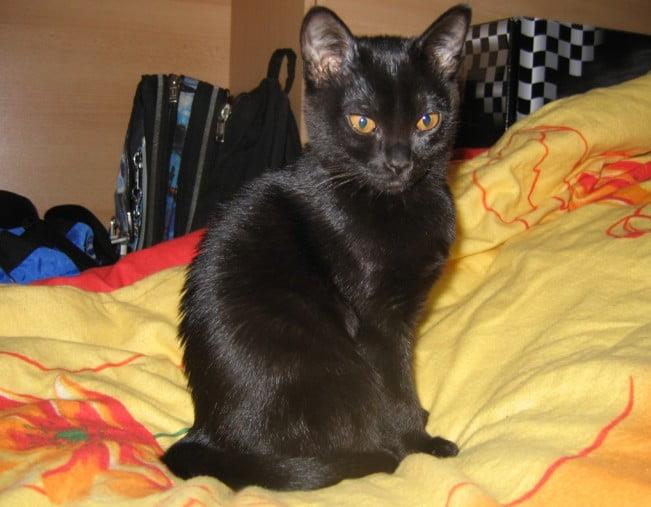
The Bombay is a sleek, solid-black cat bred to look like a miniature panther, and it plays the part well: a glossy, close-lying coat and round copper eyes on a muscular, medium frame. What draws most people in is the temperament. Bombays are typically calm, affectionate and firmly attached to their people, happiest in the middle of household activity with a playful streak that lasts well past kittenhood. They are easy to groom and generally hardy. The main thing to stay on top of is weight, because a stocky build hides gradual gain, and there are a couple of health checks worth raising with your vet.
Bombay Cat at a Glance
- Size: Medium, often muscular and surprisingly heavy for their size1
- Coat: Short, close-lying, glossy black, the only colour accepted in many breed standards1, 3
- Eyes: Copper to gold, a "new copper penny" is a common breed phrase1, 3
- Temperament: People-oriented, affectionate, playful, keen to follow household activity1
- Life span: Often 12 years or more, with individual health and lifestyle mattering more than breed labels1
- Grooming: Low-maintenance coat, weekly brushing is usually enough1
- Watch-outs: Weight gain from indoor living and overfeeding, dental disease (common across cats), and heart disease screening worth discussing with your vet1, 2, 5
History and Origin
The Bombay is a deliberately developed American breed, created to capture the look of a small black panther in a domestic cat. The foundational crosses are widely described as a sable Burmese with a black American Shorthair, with breeder Nikki Horner beginning the project in the 1950s.1, 3
The name points to the old name for Mumbai, India, and the idea of a black leopard. It is imagery rather than a geographic origin story for the cat itself.1, 3
Appearance and Physical Characteristics
In good light a Bombay's coat does not just look black, it looks lacquered. The hair is short and tight to the body, showing the underlying muscle as the cat moves.1
Breed descriptions emphasise a rounded head and large, round eyes in the copper to gold range. The overall impression is balanced and solid rather than fine-boned, and many Bombays feel heavier than they look when you pick them up.1, 3
Temperament and Personality
Bombays are people-focused cats that like being close to the action, curling up beside you, trailing you from room to room, then switching into short bursts of play.1
Individual variation matters. Some are chatty, some are quiet, some stay kittenish for years, others settle into a watchful, couch-adjacent calm. What tends to hold steady is their preference for company. They do best when they are included rather than left to entertain themselves for long stretches.1
Is a Bombay Cat Right for You?
A Bombay suits a household that is around a fair bit and wants a cat that stays involved. They are content as indoor companions, easy to groom, and generally sociable with people and other pets when introduced properly. If you are out for long hours most days, a cat this attached to company is not the easiest fit, and you would want to think about a second pet or plenty of enrichment. The other honest point is weight: their build makes it simple to overfeed without noticing, so this is a cat you manage rather than one you can put on autopilot.1
Care and Housing
Diet and weight
Bombays are often described as sturdy and stocky, which can hide gradual weight gain. For indoor cats it helps to treat body condition as something you check routinely, not only when a collar feels tight.1
Many vets use a Body Condition Score as a practical guide. On a 9-point scale, the ideal range is commonly around 4 to 5 out of 9.6, 7
Exercise
Bombays respond well to interactive play. Short, frequent sessions that mimic hunting work best: wand toys, small throws, puzzle feeders, and rotating toys so the same object does not go "invisible" after a week.1
Grooming
The coat is low-shedding and close-lying, so most Bombays only need occasional brushing to lift loose hair and keep the shine even. Nail trims, ear checks, and a quick look at the eyes and gums fit naturally into the same weekly rhythm.1
Health and Lifespan
No breed comes with guarantees. What you can do is understand the common themes, then make prevention and early detection part of normal life.
Dental disease
Dental disease is widespread across pet cats, and it can move along quietly until eating changes or breath becomes sharp. Tooth brushing with cat-specific toothpaste is one of the most effective home habits if your cat will tolerate it, but it needs to be introduced slowly and gently.4, 5
Heart disease screening
Hypertrophic cardiomyopathy (HCM) is the most commonly diagnosed heart disease in cats overall. Some cats show no signs early on, which is why routine vet exams matter, and why a vet may suggest additional testing if a murmur is heard or risk factors stack up.2
Echocardiography, a heart ultrasound, is widely described as the gold standard test for diagnosing cardiomyopathies in cats.2
Training and Socialisation
Bombays learn quickly, especially when training feels like a game. Keep sessions short, reward calm behaviour, and end before your cat loses interest.
- Use food rewards thoughtfully: tiny portions, counted as part of daily intake, work better than "just one more" treats.
- Handle gently and often: brief touches to paws, ears, and the mouth area, without forcing, can make vet visits and grooming easier later.
- Introduce new animals slowly: separate spaces at first, scent swaps, then short supervised visits. Progress is usually measured in days and weeks, not minutes.
Finding a Bombay: Breeder or Rescue
If you are buying a kitten online, the safest starting point is simple: meet the cat in person, and see the conditions it is being kept in. A responsible source will welcome questions, provide health and vaccination records, and avoid pressure tactics or rushed sales.8
Adoption can also be a calm path into Bombay ownership, especially if you are hoping for an adult cat whose temperament is already clear.
The Bottom Line
The Bombay is an affectionate, bright, closely bonded cat in a striking black coat that asks for very little upkeep. For an involved household it is an easy animal to live with. Keep an eye on weight, take dental care seriously, and treat regular vet checks as part of ordinary life rather than a response to a crisis.1, 5, 6
References
- The International Cat Association (TICA), Bombay breed information
- Cornell Feline Health Center, Cardiomyopathy in cats (includes HCM and diagnosis)
- Wikipedia, Bombay cat (overview and links to breed standards)
- Cats Protection, Cat dental care (brushing guidance)
- Blue Cross, Cat dental care (signs and prevention)
- US FDA, Summary of AAHA nutritional assessment guidelines (BCS ranges)
- World Small Animal Veterinary Association (WSAVA), Global Nutrition Guidelines and BCS tools
- RSPCA Australia Knowledgebase, Red flags when looking for a dog or cat online

Dog lover and writer at My Pets Australia, sharing practical breed guides and care advice for Australian pet owners.