Balinese Cat
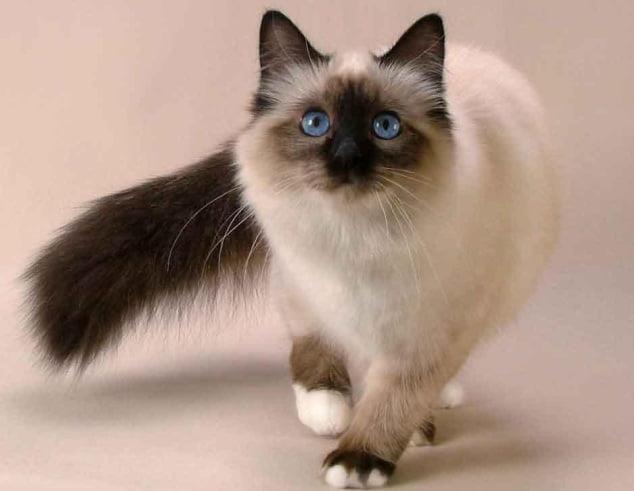
The Balinese is a long-haired version of the Siamese: sleek, bright-eyed, and constantly tuned in to what its people are doing. It carries the same tapering lines and blue-eyed colourpoint look, but with a fine, flowing coat and a plume of a tail. What sells most people on the breed is the personality rather than the fur. This is a social, talkative cat that follows the household around, comments on the day, and expects to be included.1, 2 It is elegant company, though it is company that wants a lot of your attention.
History and Origin
Despite the name, the Balinese was developed in the United States. Long-haired kittens turned up now and then in Siamese litters, because the long-hair trait is recessive, and breeders in the mid-20th century began selectively breeding for the semi-long coat while keeping the Siamese body type and colourpoint pattern.1, 2
The name was chosen because the cats' long lines and flowing tail reminded early fanciers of Balinese dancers. It is a label for style, not geography.1, 2
Appearance and Physical Characteristics
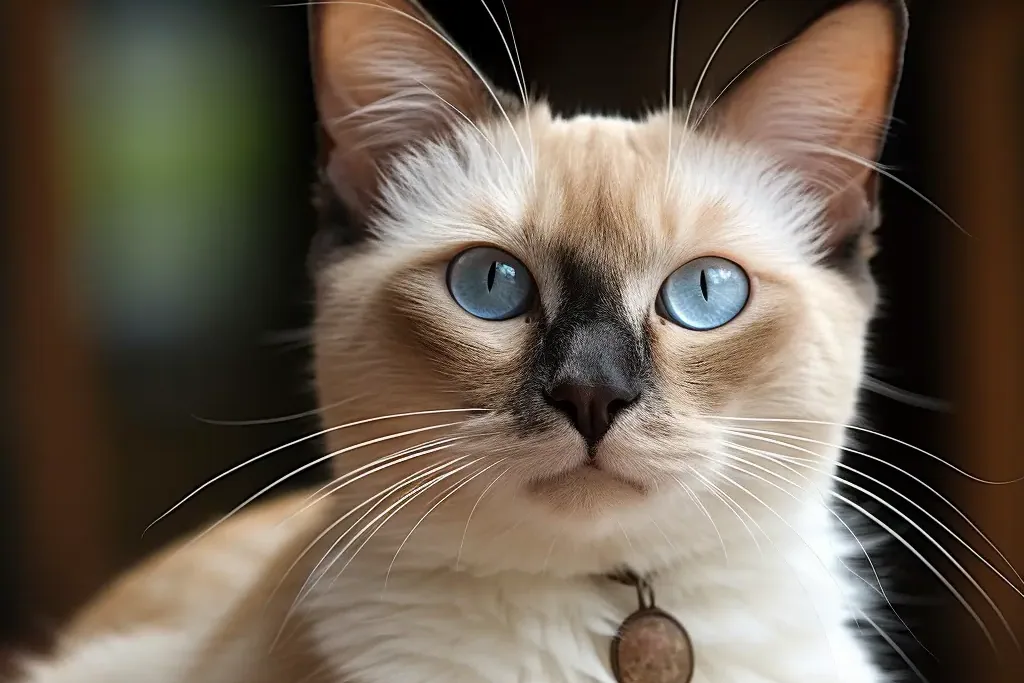
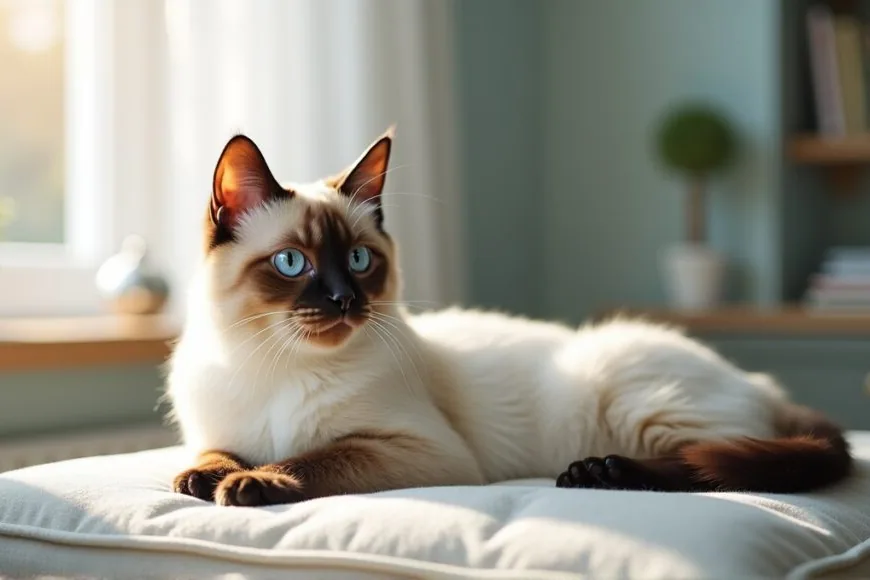
A Balinese looks like a Siamese drawn in longer strokes: a tapering wedge-shaped head, large ears, almond-shaped blue eyes, and a slender, athletic body. It is a medium-sized cat, usually about 2.3 to 5.5 kg depending on sex and type. The coat is semi-long, fine and silky, and typically a single coat with less undercoat than many longhairs, so it lies close to the body rather than puffing out, and the tail carries a noticeable plume.1, 2, 3, 4
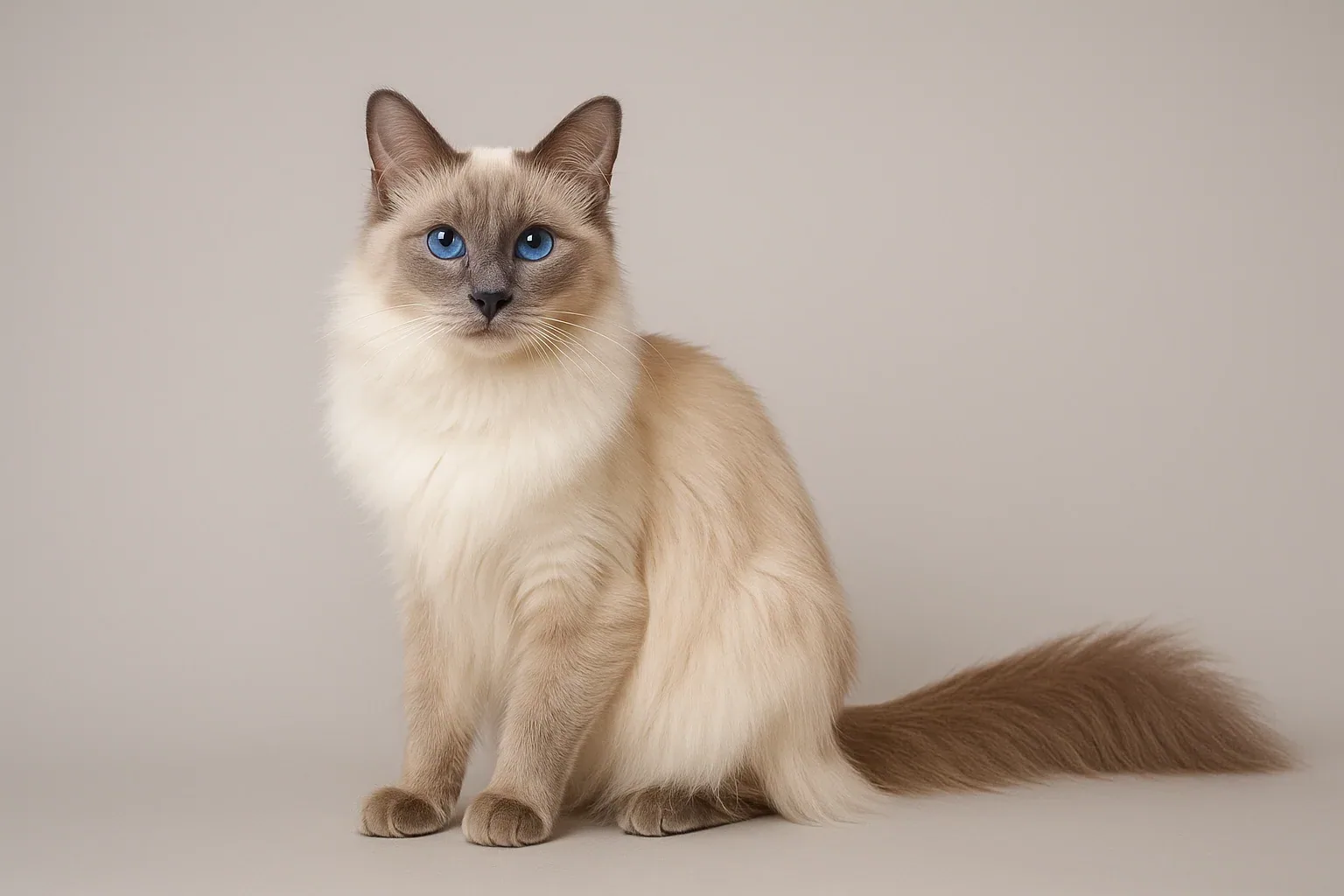
All Balinese are colourpoint patterned. The body stays lighter while the points (mask, ears, legs and tail) are deeper in colour, creating a clean contrast that becomes more pronounced as the cat matures. Common points include seal, blue, chocolate and lilac, and some registries recognise additional point colours and patterns.1, 2, 4
Temperament and Personality
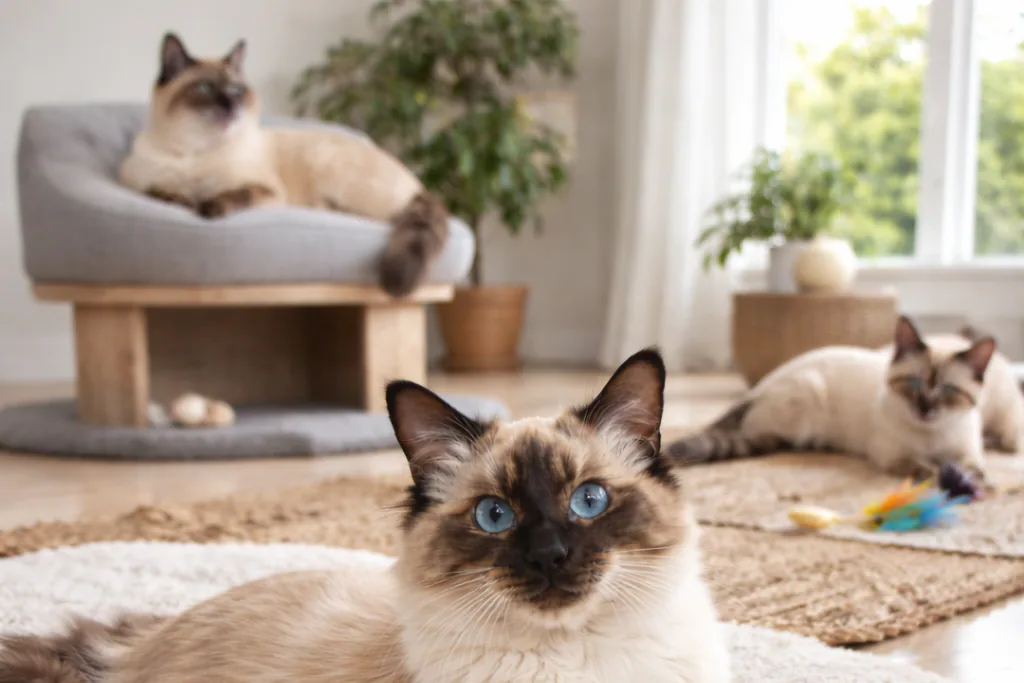
Balinese are people-oriented and alert to everything happening in the home. Many will trail a favourite person from room to room, perch nearby during quiet tasks, and turn up quickly the moment a routine changes.1, 2
They are also vocal. It is often described as conversation rather than constant noise, with short calls, longer opinions, and a running commentary when they want interaction. The voice is usually softer than the Siamese, but still communicative, and individual cats vary a lot.2, 3
Because they are bright and socially motivated, boredom can show up as mischief: climbing, opening, investigating, and testing which cupboards are truly off-limits. A tall cat tree, window perches, and regular play channel that energy without trying to squash it.4
Is a Balinese Right for You?
The Balinese suits households that actually want an interactive cat, one that watches closely, learns quickly, climbs well, and communicates often. If you are out of the house all day and want a low-demand, quiet pet that keeps to itself, this is probably the wrong breed. The talking and the need for company are the whole point of the cat, not a quirk you can train away.1, 2

It is a legal breed to own across Australia, like any domestic cat, though local councils have their own rules on registration, desexing and containment, so it is worth checking what applies in your area.
Care and Housing
Balinese are agile jumpers and enthusiastic climbers, so vertical space matters as much as floor space. Give them a tall cat tree, a window perch or two, and somewhere high to retreat to. Daily play sessions, kept short and lively, suit them well, especially when you rotate toys rather than leaving the same ones out forever.
- Keep it simple: wand toys, small soft toys, and short fetch-style games often work well.
- Make meals do some work: puzzle feeders can slow eating and add mental stimulation.5
They also respond well to reward-based training because they are attentive and enjoy interaction. Keep sessions short, end on a success, and focus on practical behaviours: coming when called, being comfortable with a carrier, and accepting gentle handling of paws and mouth. For socialisation, aim for calm exposure rather than forced introductions, with new people, rooms and sounds offered in small doses. A confident cat is usually built from many ordinary, non-scary experiences.
Health and Lifespan
Balinese often live into the low-to-mid teens, with some lines living longer.1, 4 No breed is free of health issues, and Balinese are no exception, so treat "no breed-specific problems" as a red flag and ask breeders what they screen for and what has occurred in their lines.4, 7
Progressive retinal atrophy (PRA) is an inherited eye disease that causes gradual vision loss and can progress to blindness. Responsible breeding programs use genetic testing and avoid pairings that would produce affected kittens, so asking for evidence of testing is reasonable.7
Amyloidosis, abnormal protein deposits in organs, often discussed in relation to the liver and kidneys, has been reported in "Asian" breed groups including the Balinese. It is not something an owner can prevent with grooming or diet, but early veterinary attention to weight loss, poor appetite, vomiting or ongoing lethargy matters.7
Dental disease is common across cat breeds. Home tooth brushing with pet toothpaste helps reduce plaque, and professional dental care under anaesthetic is sometimes needed to treat disease under the gum line.6
Grooming and Care
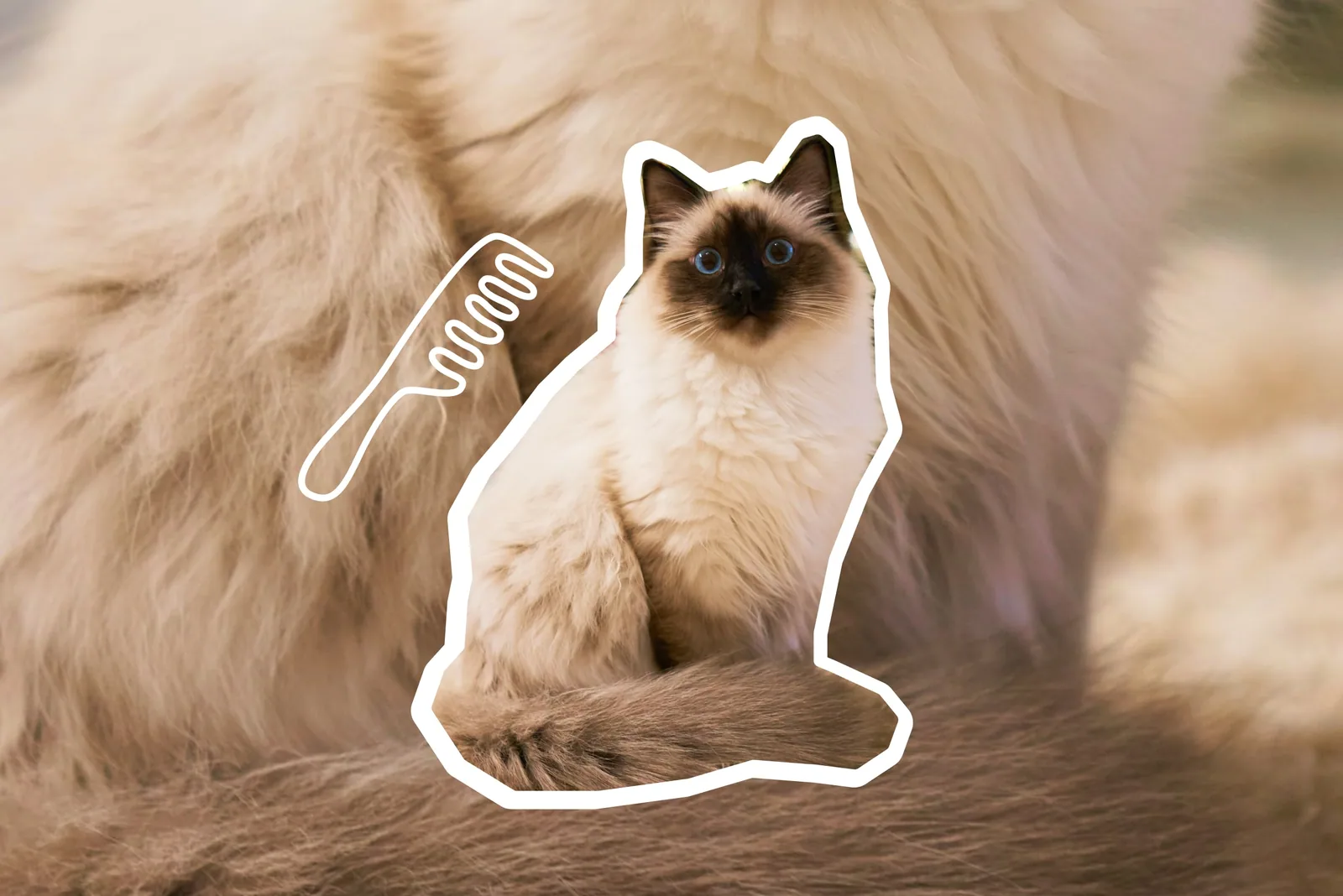
The Balinese coat is fine and relatively low in undercoat compared with many long-haired breeds, which reduces matting, but the risk is not zero. Regular combing or brushing still helps remove loose hair and keeps the tail plume tidy.3, 4

Most cats do not need routine bathing. If a bath is genuinely necessary, for example after sticky contamination, use a cat-specific shampoo and keep the experience calm and brief.
Diet and Nutrition
Cats are obligate carnivores and do best on a complete and balanced diet formulated for their life stage, whether kitten, adult or senior. In Australia, check the label and aim for foods that meet recognised standards such as AS 5812 or an equivalent international nutritional profile.5

Fresh water matters more than people expect. Many cats drink better when water is placed away from food bowls, offered at several stations, and kept clean daily.5
A Few Things Worth Knowing
The Balinese is essentially a long-haired variety within the Siamese family, with the semi-long coat arising from a recessive long-hair gene. Registries describe it as a longhaired Siamese type, sharing the same long, tapering lines and colourpoint pattern, plus the distinctive plume tail.1, 2 If you are buying a kitten, ask for:
- health history of the parents and close relatives, not just the kitten
- any genetic testing used in the breeding program, for example PRA where relevant7
- vaccination and parasite-control records
- clear, written desexing and return policies
The Bottom Line
The Balinese is an elegant, intelligent and deeply sociable cat that rewards households who want to be involved with their pet day to day. The coat is easier than it looks, but the personality is the real commitment: this is a cat that wants company and says so. Choose a breeder who talks plainly about what can occur in their lines and what they do to reduce risk, and you have a companion that stays interesting for its whole life.2, 7
References
- The International Cat Association (TICA), Balinese
- Cat Fanciers' Association (CFA), Balinese
- Governing Council of the Cat Fancy (GCCF), Balinese
- Purina UK, Balinese breed information
- RSPCA Knowledgebase, What should I feed my cat?
- American Animal Hospital Association (AAHA), Your pet's dental care
- PetMD, Balinese cat breed: health and care

Dog lover and writer at My Pets Australia, sharing practical breed guides and care advice for Australian pet owners.