Angora Cat
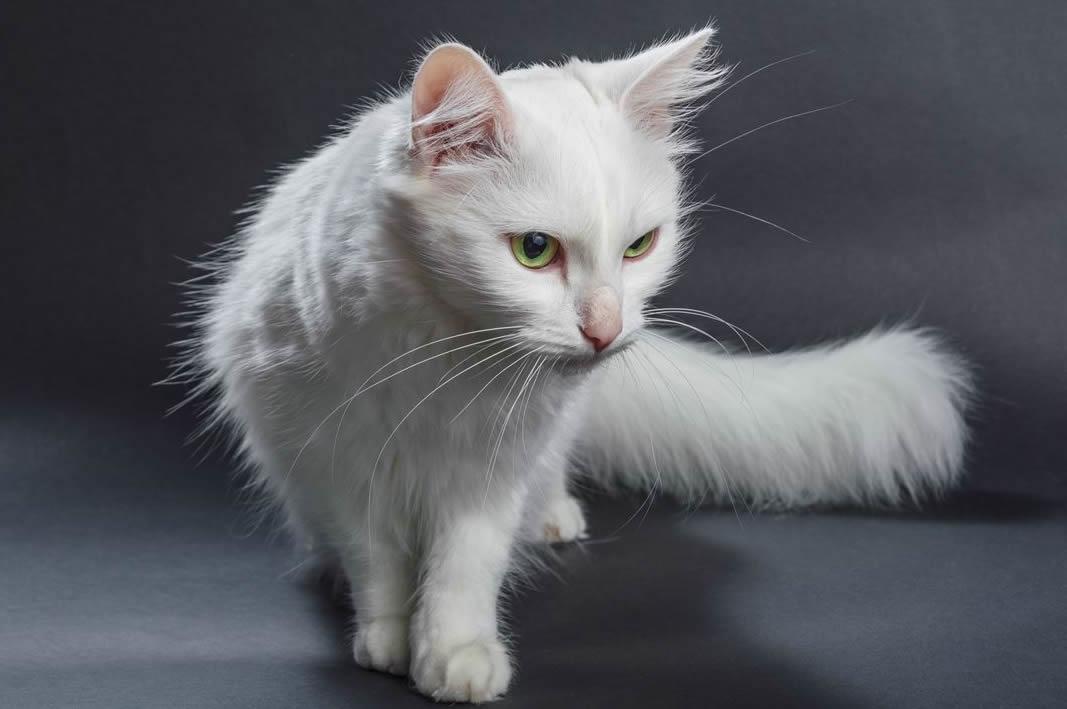
The Turkish Angora is the cat most people picture when they hear "Angora": a fine, silky semi-longhair, lean and light on its feet, with a curious, people-oriented streak. It is bright and athletic, often affectionate on its own terms rather than a permanent lap cat, and its single coat tends to mat less than the heavier double coats of some other longhaired breeds. That last point is a genuine advantage, but it is not a free pass. This is still a longhaired cat that needs steady grooming, dental and vet care, and safe containment to do well in an Australian home.
History and Origin
The Turkish Angora is a natural breed from central Anatolia, around Ankara, which was historically known as Angora. Longhaired cats from this region were being described in Europe from around the late 1500s, and the breed later influenced the development of the Persian in Britain and the United States.2 Early recognition often focused on white cats, but modern breed standards generally accept many colours and patterns, depending on the registry.2
Appearance and Physical Characteristics
Turkish Angoras are graceful, lean and well-muscled rather than stocky, medium in size and fine-boned. The coat is semi-long and usually described as fine and silky, with a seasonal change, often lighter in the warmer months and fuller in winter.1, 2 Eyes may be blue, green, amber, or odd-eyed, with each eye a different colour. White cats with blue eyes are the group most strongly linked with congenital deafness, which is covered below.1
Temperament and Personality
In a home, Turkish Angoras are alert and athletic, and they like height. Expect top shelves, cat trees and the back of the sofa, followed by brief bursts of close contact when it suits them.1 Many are social with familiar people but reserved with strangers at first. They usually do best with gentle handling, predictable routines, and enough stimulation to keep boredom from turning into nuisance behaviour.2
Is an Angora Right for You?
The Angora suits an active household that wants an engaged, playful cat and will keep up with the grooming. It is a poor match if you want a low-maintenance short-haired cat or a placid lap warmer that ignores the furniture. Be honest about the daily brushing and the safe containment this breed needs, especially if you take on a white, blue-eyed cat that may be deaf. One naming point matters when you are choosing a cat: when people say "Angora cat" they almost always mean the Turkish Angora. Terms like "Persian Angora", "American Angora" or "Japanese Bobtail Angora" are not standard breed names across major registries, so ask what the cat is registered as, or whether it is simply a longhaired domestic with Angora-like features.
Care and Housing
Give an Angora somewhere to climb and something to chase, and much of the work is done. Vertical perches, a cat tree, daily play and predictable mealtimes keep this active breed settled. Training is usually straightforward: keep sessions brief and calm, use consistent cues, and reward with whatever matters to the individual cat, whether tiny food treats, a favourite toy or a short play session. For a new or nervous cat, slow socialisation works best, starting in a quiet room with hiding spots before opening up access to the rest of the home.
Safe containment is one of the most practical choices you can make in Australia, for your cat's welfare and for wildlife. The Australian Government advises keeping cats inside overnight, particularly at dawn and dusk, to reduce hunting and to protect cats from injury and disease risks associated with roaming.7 Contained cats also avoid traffic, fights and infections. If your cat enjoys fresh air, a secure cat run, sometimes called a catio, or an enclosed yard gives them sun and scent without the roaming risks.
Health and Lifespan
No breed is problem-free, but Turkish Angoras are often described as generally healthy, and with good care many live into their teens, though this varies by individual and by breeding lines.1 A few issues are worth watching for, especially when choosing a breeder or adopting a white, blue-eyed cat.
Congenital deafness. White cats with blue eyes have a higher risk of hereditary deafness. This is linked to the genetics of white coat colour and eye colour rather than being unique to Angoras.1, 5 Deaf cats can live good lives, but they should be kept safely contained, indoors or in a secure cat run, because they cannot rely on sound to detect cars, dogs or other hazards.1
Heart disease (HCM). Hypertrophic cardiomyopathy is the most common heart disease in cats and is reported in Turkish Angoras. Reputable breeders may screen breeding cats, and your vet can advise if a murmur or other signs appear.6
Hairballs and wool block. Hairballs are common in longhaired cats, but frequent vomiting, appetite changes, constipation, lethargy or signs of pain warrant a veterinary check. RSPCA guidance notes that hairballs can, in some cases, contribute to intestinal blockages, which makes prevention and early assessment important.4
Grooming and Care
Even a relatively low-matting coat still collects loose hair, so regular grooming reduces tangles and helps cut down hairballs.3, 4 A simple routine covers most of it:
- Brush or comb: ideally daily for long and medium-haired cats, especially during shedding seasons.4
- Work gently: follow the direction of coat growth, and tease small mats apart with your fingers rather than yanking through them.4
- Bathe occasionally if needed, using a cat-specific shampoo, and avoid over-bathing, which can dry the coat and skin.1
If the coat is severely matted, do not try to cut it out at home, because the skin can tear easily. Speak with your vet about safe clipping options, as sedation is sometimes needed for the cat's comfort.3
A Few Things Worth Knowing
- Coat: semi-longhair, typically a fine, silky single coat, often less prone to heavy matting than some other longhaired breeds.1, 2
- Size: medium, fine-boned and athletic in build.2
- Colour: traditionally white, but accepted in many colours and patterns by major registries.2
- Temperament: bright, active and people-oriented, often affectionate without being a constant lap cat.1, 2
- Key care priorities: regular grooming, dental care, enrichment through climbing and play, and safe containment.
The Bottom Line
The Turkish Angora is a light-footed, bright companion with a soft coat, sharp curiosity and a habit of watching the household from above. Its needs are simple but steady: regular grooming, dental and vet care, daily play, and safe containment. Do those well and the breed's best qualities tend to show up quietly over time.
References
- PetMD: Turkish Angora Cat Breed Health and Care
- Fédération Internationale Féline (FIFe): Turkish Angora
- RSPCA Pet Insurance (Australia): Grooming your cat
- RSPCA Knowledgebase: How often do I need to groom my cat?
- The Traditional Cat Association (TCA): Traditional Turkish Angora FAQs (health and deafness)
- Purina: Turkish Angora breed information (health notes incl. HCM and deafness risk in white/blue-eyed cats)
- Australian Government (DCCEEW): Protecting our wildlife, responsible pet ownership
- Australian Government (DCCEEW): Feral cats
- NSW Government: Keeping cats home and wildlife safe (media release, 26 October 2025)

Dog lover and writer at My Pets Australia, sharing practical breed guides and care advice for Australian pet owners.